
AI Coding Tools: What They Are and How They Change How You Code
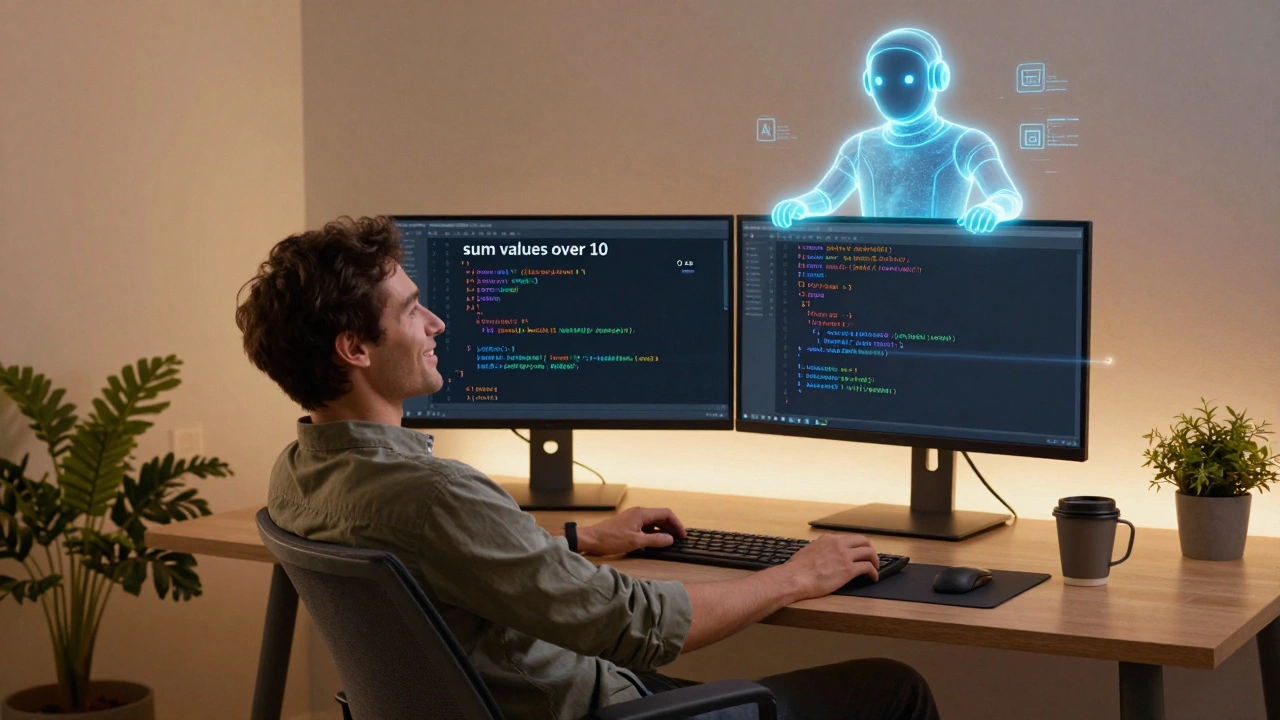
When you write code, AI coding tools, software that uses artificial intelligence to assist with writing, debugging, and optimizing code. Also known as AI-powered development assistants, they don’t replace programmers—they make them faster, smarter, and less frustrated. Think of them like a co-pilot that knows every syntax rule, remembers your past patterns, and spots errors before you even hit run.
These tools rely on AI programming, the use of machine learning models trained on millions of lines of real code to predict what you’ll type next. They’re built into editors like VS Code, integrated into cloud platforms, and even embedded in chatbots that explain how to fix your bugs. The most common ones understand Python for AI, a leading language for building intelligent systems because of its simplicity and rich libraries like TensorFlow and PyTorch, but they work across JavaScript, Java, C#, and more. You don’t need to be an AI expert to use them—just someone who writes code.
What makes these tools powerful isn’t just autocomplete. It’s how they reduce repetitive work. Need to write a unit test? They generate it. Struggling with a cryptic error message? They explain it in plain English. Working with legacy code? They refactor it to be cleaner. They learn from your style, so over time, they feel less like a robot and more like a teammate who’s always on call. Companies using these tools report up to 55% faster development cycles—not because they’re coding more, but because they’re stuck less.
And it’s not just about speed. AI coding tools help beginners learn faster by showing real examples of clean, professional code. For experienced devs, they cut through noise and let you focus on the hard problems—the architecture, the logic, the innovation. They’re especially useful when you’re switching languages or jumping into a new framework. Instead of spending hours searching Stack Overflow, you get answers tailored to your code.
Under the hood, these tools connect to massive datasets of open-source projects, learning what works and what doesn’t. They don’t guess—they analyze patterns across thousands of repositories. That’s why they can suggest fixes for bugs you’ve never seen before, or recommend libraries you didn’t know existed. They’re not magic, but they’re close.
What you’ll find in this collection are real, practical posts about how these tools work in the wild. You’ll see how they’re used in daily development, how they integrate with Python and other languages, and how they’re changing the way teams build software. No fluff. No hype. Just what works—and what doesn’t.
- Dec 7, 2025
- Alfred Thompson
- 0 Comments
The Future of Coding: What Programming Looks Like in 2025 and Beyond
The future of coding is less about typing and more about thinking. Discover how AI tools, low-code platforms, and shifting skills are changing what it means to be a programmer in 2025.