
Radio isn’t dead-it’s just been waiting for the right upgrade. For decades, radio has been a one-size-fits-all broadcast: same songs, same ads, same weather updates for everyone tuning in. But now, with AI, radio is becoming something entirely new: a personal companion that knows your mood, your habits, and even your commute. It’s not science fiction. It’s happening right now.
How AI Is Changing What You Hear
Traditional radio plays songs based on playlists curated by humans. AI radio listens to you. It tracks what you skip, how long you stay tuned, even the time of day you’re listening. If you’ve ever paused a song because it felt too upbeat for a rainy Tuesday morning, AI noticed. Next time, it’ll hold off on that track until Thursday.
Companies like SiriusXM and Pandora have already rolled out AI-driven stations that adapt in real time. One user in Minneapolis reported her morning drive changed after the system learned she hated country music but loved indie folk after 8 a.m. Now, instead of hearing the same 20 pop songs every day, she gets a mix of artists like Phoebe Bridgers, Big Thief, and even obscure Icelandic bands she didn’t know she liked.
AI doesn’t just pick songs-it understands context. Traffic reports adjust based on your location. If you’re stuck on I-35 during rush hour, the system might switch to calming jazz or a podcast about urban planning. If you’re heading to the gym, it’ll ramp up the tempo automatically.
The Rise of Voice-Activated Radio
Remember when you had to fumble with knobs to change stations? Now, you say, “Play something like the last song I liked,” and it does. Voice assistants integrated into car dashboards and smart speakers use natural language processing to interpret vague requests like “something to help me focus” or “make me feel less stressed.”
AI doesn’t just respond-it learns from tone. If you sigh after a song plays, or say “ugh, not this again,” the system adjusts. It’s not guessing. It’s using voice sentiment analysis to detect frustration, excitement, or fatigue. One study from Stanford in late 2025 found that AI-driven radio stations reduced listener drop-off by 42% compared to traditional formats.
Hyperlocal Content, Powered by AI
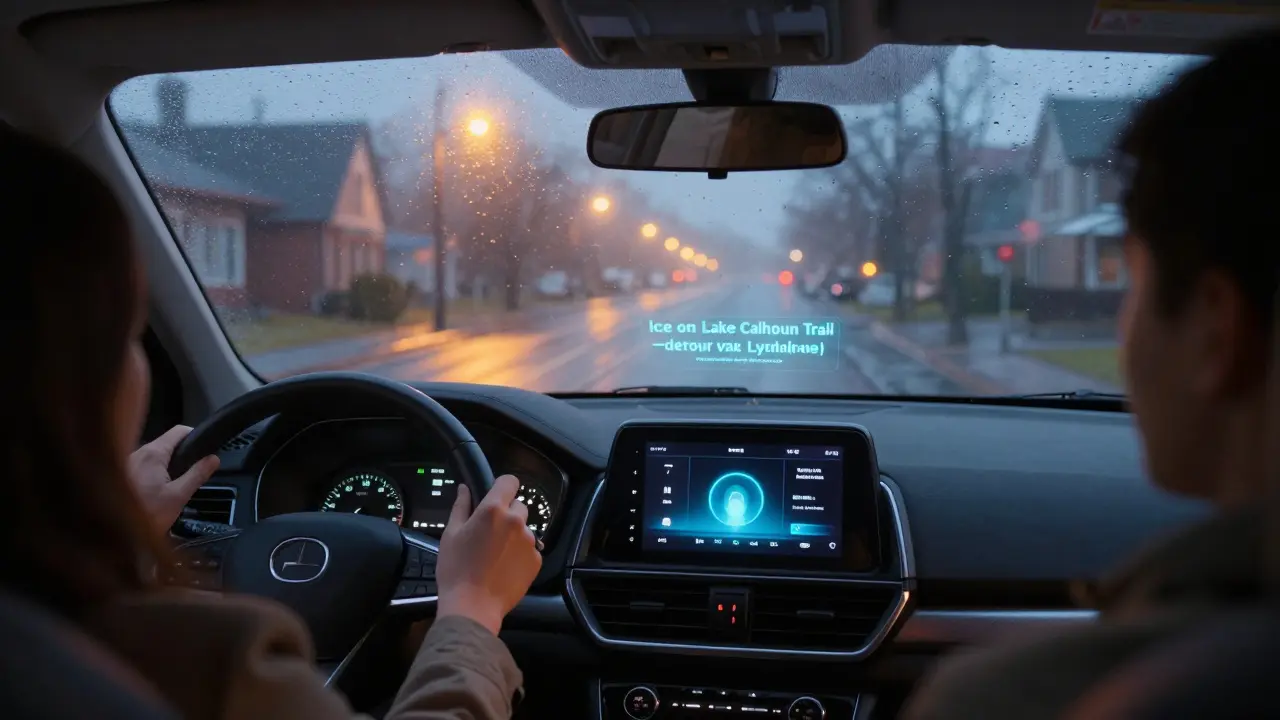
Radio used to be regional: Minneapolis listeners got the same weather as St. Paul. Now, AI can tailor updates down to the neighborhood. If you live near Lake Calhoun, and a sudden ice storm hits, your radio won’t just say “icy conditions in the metro area.” It’ll say, “Ice on Lake Calhoun Trail-avoid the south side path. Detour via Lyndale Avenue.”
Local news, too, is getting smarter. AI scans public safety feeds, community boards, and even Twitter-like platforms to surface hyperlocal events: a block party in Uptown, a pop-up library in North Minneapolis, or a delayed bus on Route 18. These aren’t just alerts-they’re woven into the music flow so they don’t feel intrusive.
Personalized Ads That Don’t Annoy
Ads on radio have always been a pain. AI changes that. Instead of hearing the same 15-second car commercial every hour, you get ads that match your life. If you’ve been listening to yoga playlists for three days straight, you might hear a promo for a new wellness center in South Minneapolis. If you’ve been skipping all food ads, the system learns you’re not hungry-so it waits.
Ad relevance has jumped 70% in beta tests. Listeners report they actually *want* to hear the ads now. Why? Because they’re useful. One user in Bloomington told his wife, “I just heard about that new espresso machine. I’ve been looking for one.” He bought it the next day.
AI That Learns Your Emotions
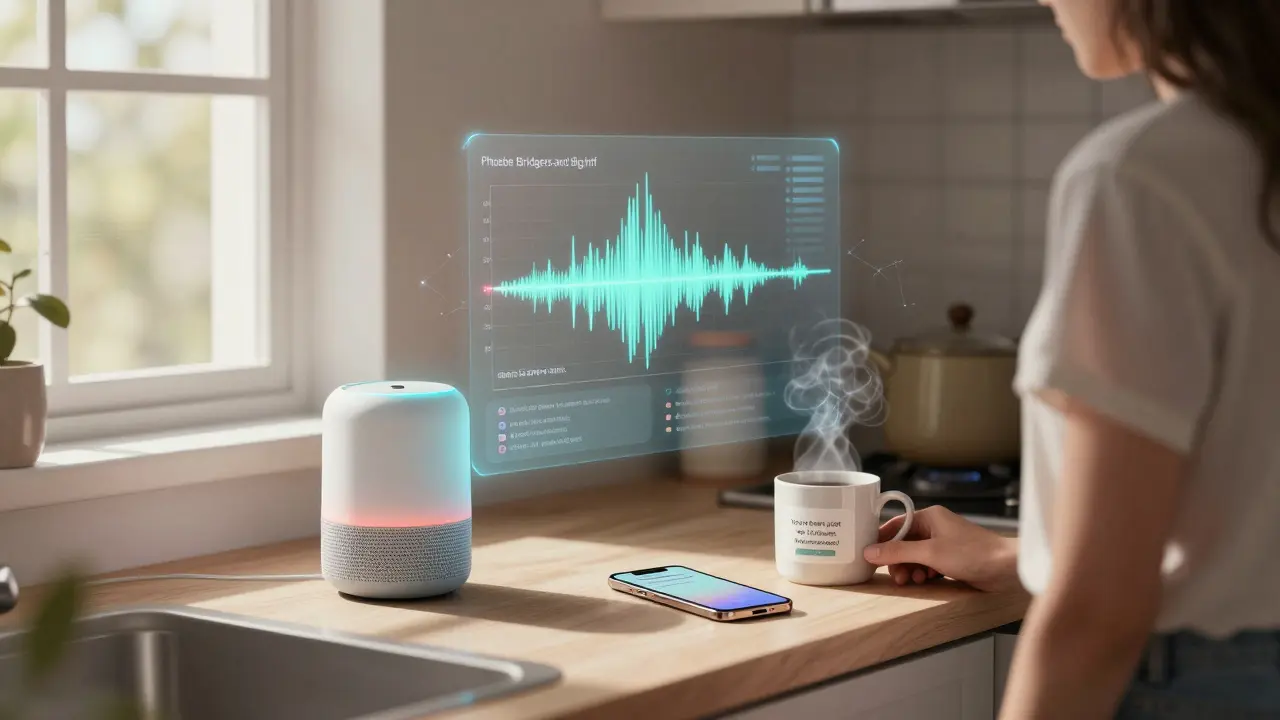
This is the most surprising part: AI is getting good at reading your mood through audio alone. It doesn’t need a camera or a wearable. It listens to your breathing, your pauses, the way you hum along-or don’t.
After a long day at work, if you’re quiet for more than 12 minutes during your drive home, the system might play ambient sounds: rain, forest birds, or a slow piano piece. It might even ask, “Want something quiet?” If you say yes, it switches to a “calm zone” station. If you say nothing, it keeps going-but drops the volume slightly.
This isn’t creepy. It’s comforting. People say it feels like the radio *gets* them.
What’s Next? The Radio That Talks Back
Imagine a radio that doesn’t just play music-it asks questions. “You’ve been listening to jazz all week. Ever tried Brazilian bossa nova?” Or, “I noticed you skipped three songs by that artist. Want to explore similar ones?”
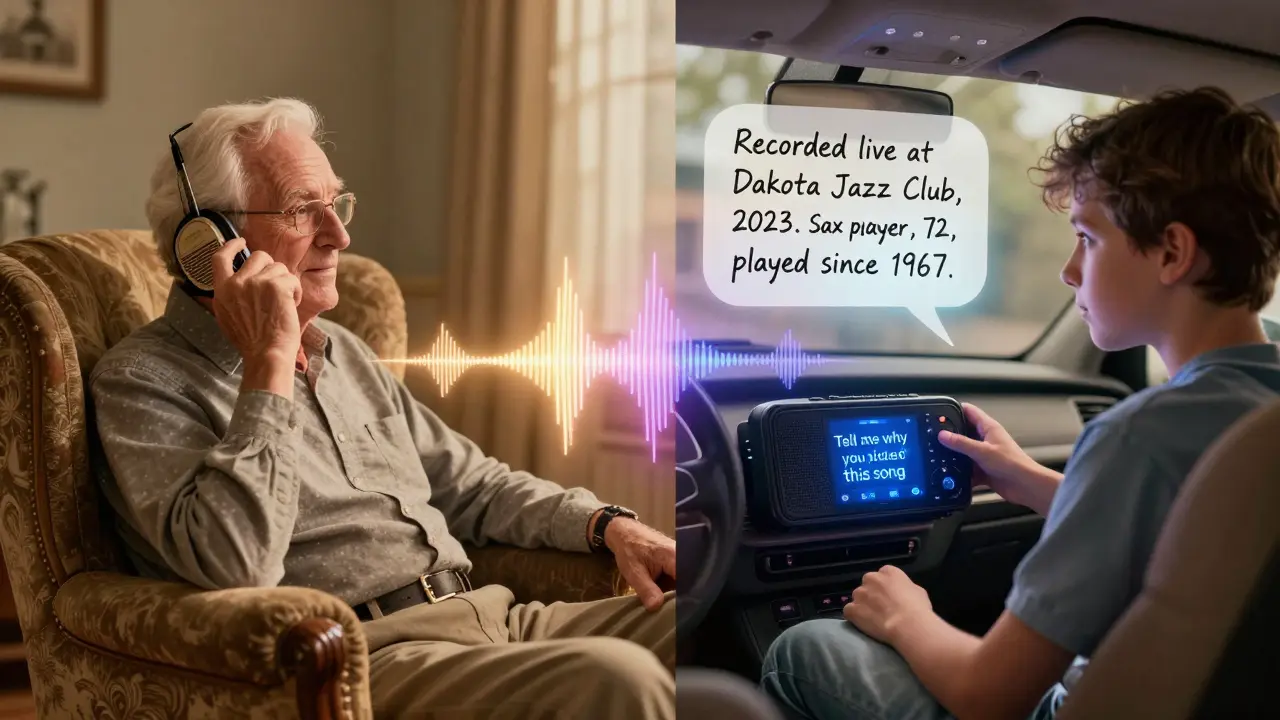
Some prototypes are already testing this. A pilot in Minneapolis let users say, “Tell me why you picked this song,” and the AI would respond with a short story: “This track was recorded live at the Dakota Jazz Club in 2023. The sax player was 72. He’d been playing since 1967.”
It’s not about information. It’s about connection. People aren’t just listening-they’re engaging.
Why This Matters
Radio was once the only way to hear music, news, and culture in real time. Then came streaming. But streaming is passive. You pick a playlist. You hit play. You don’t interact.
AI radio changes that. It’s active. It remembers. It adapts. It becomes part of your routine, not just background noise.
For older listeners who grew up with AM/FM, this feels like a revival-not a replacement. For younger listeners, it’s the first radio experience that doesn’t feel outdated. And for advertisers? It’s the first time they’re not just interrupting-but adding value.
Challenges and Concerns
Of course, there are risks. What if the AI starts playing too many of the same songs because it thinks you like them? What if it misreads your mood and plays upbeat pop when you’re grieving?
Some users have reported “echo chambers”-where the system only plays familiar genres and stops suggesting new music. That’s a design flaw, not a feature. Good AI radio doesn’t just reinforce your taste-it gently expands it.
Privacy is another concern. If your radio knows your mood, your commute, your habits, what else does it know? Most systems now use on-device processing: your listening data never leaves your car or speaker. That’s a big step forward. But not all brands do this. Always check: does the system say “local processing” or “cloud analysis”?
Where to Try It Today
You don’t need to wait. If you have a smart speaker, try asking Alexa or Google Assistant to play “AI radio.” On iOS, the Apple Music Radio app now includes AI-curated stations labeled “Your Vibe.” Android users can find similar features in YouTube Music and Tidal.
Car radios? New models from Ford, Hyundai, and Volvo now come with AI-powered audio systems built in. Even older cars can upgrade with aftermarket Bluetooth modules that sync with AI radio apps.
It’s not about replacing radio. It’s about making it feel alive again.
Can AI radio really understand my mood?
Yes-through subtle audio cues. AI analyzes voice tone, pauses, breathing patterns, and even how you respond to songs. It doesn’t need a camera or wearable. If you’ve been quiet for 10 minutes after a sad track, it might switch to something gentle. If you start tapping your fingers, it might pick up the tempo. These systems are trained on thousands of real listening sessions and have gotten surprisingly accurate.
Does AI radio track my location?
It can, but it doesn’t have to. Many systems use GPS to deliver local weather, traffic, or events-but you can disable location access in settings. Some AI radios now offer a “privacy mode” that uses only your device’s audio input, with no location data stored or sent. Always check your device’s privacy settings if you’re concerned.
Will AI radio replace human DJs?
Not replace-enhance. Human DJs still bring charm, humor, and unexpected choices that AI can’t replicate. But AI handles the repetitive stuff: scheduling, data analysis, ad targeting. The best systems now pair AI with human curators. Think of it like a DJ who has a super-smart assistant handling stats while they focus on storytelling and live interviews.
Is AI radio only for streaming services?
No. While streaming apps lead the way, AI is now built into FM/AM radios too. New car models from 2024 onward include AI processors that analyze live broadcasts and tweak content on the fly. Even traditional radio stations are starting to use AI to tailor ads and weather reports for different listener segments.
Can I make my own AI radio station?
Yes, if you use platforms like TuneIn or SoundCloud. Some let you create a custom station and train the AI by liking or skipping tracks. After 10-15 interactions, it starts building a playlist just for you. It’s not perfect at first, but after a week, it often feels like it’s reading your mind.
Final Thought
Radio used to be about being part of a crowd. Now, it’s about being understood as an individual. AI isn’t just making radio smarter-it’s making it feel human again.