

Online learning has come a long way since the early days of static videos and PDF downloads. But even the best pre-recorded lectures can’t keep up with how real people learn. That’s where AI steps in-not to replace teachers, but to make learning feel more personal, more responsive, and more alive.
How AI Personalizes Learning Paths
Every student learns at a different pace. Some need extra time to grasp algebra. Others breeze through it and get bored. Traditional online courses treat everyone the same. AI changes that.
Platforms like Khan Academy and Coursera now use AI to track how long you spend on each question, which answers you get wrong, and even how often you pause or rewind. That data builds a real-time profile of your understanding. If you’re struggling with quadratic equations, the system might suggest a 5-minute video from a different teacher, then give you three simpler practice problems before trying again. If you’re acing it? It skips ahead to calculus basics.
This isn’t guesswork. A 2024 study from Stanford’s Center for Education Policy Analysis showed students using AI-driven adaptive learning tools improved test scores by an average of 22% over six weeks compared to those using standard course materials.
AI Tutors That Never Sleep
Remember when you had a question at 11 p.m. and had to wait until morning? AI tutors fix that.
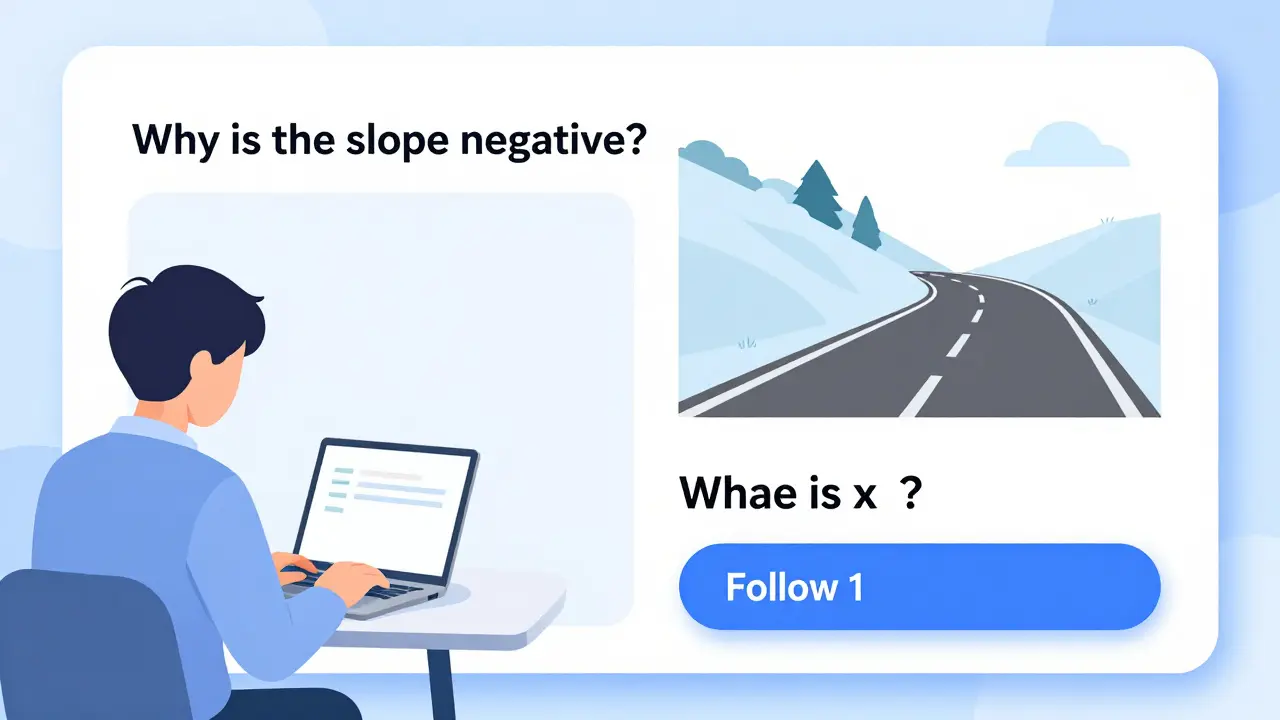
Tools like ChatGPT for Education, Google’s Gemini for Classrooms, and specialized platforms like Squirrel AI let students ask questions in plain language. No need to phrase it like a textbook. You can type: “I don’t get why the slope is negative here” and get a breakdown with diagrams, real-life examples, and follow-up quizzes.
These aren’t just chatbots. They’re trained on thousands of teaching interactions. They know common misconceptions-like thinking multiplying two negatives gives a negative result-and they correct them gently. One high school student in Minneapolis told me she used her AI tutor every night for a month before her SATs. She went from a 1080 to a 1420.
Real-Time Feedback Without the Bureaucracy
Writing essays used to mean waiting days for a teacher’s comments. Now, AI gives instant feedback on structure, clarity, and even tone.
Tools like Grammarly for Education and Turnitin’s AI Writing Detection don’t just check grammar. They analyze whether your argument flows, if your evidence supports your claims, and if your voice sounds confident or hesitant. One college instructor in Minnesota started requiring students to submit two drafts: one raw, one revised after AI feedback. Final papers improved in coherence by 37%.
It’s not about automating grading. It’s about giving students a practice partner that doesn’t get tired or frustrated. The AI says, “Your thesis is strong, but this paragraph feels disconnected.” That’s the kind of feedback that sticks.
Breaking Language and Accessibility Barriers
AI doesn’t just help native English speakers. It opens doors for non-native learners and students with disabilities.
Real-time translation tools now work inside video lectures. If you’re learning French history but your native language is Spanish, AI can translate the audio as it plays, with captions that adjust to your reading speed. For students with dyslexia, AI can convert text to speech with natural intonation, highlight key terms, and simplify complex sentences on the fly.
At the University of Minnesota, a pilot program using AI-powered accessibility tools saw a 45% increase in course completion among students with learning differences. One student said, “For the first time, I didn’t feel like I was fighting the system just to learn.”
AI That Notices When You’re Struggling
Most online courses don’t know when you’ve stopped logging in. AI does.
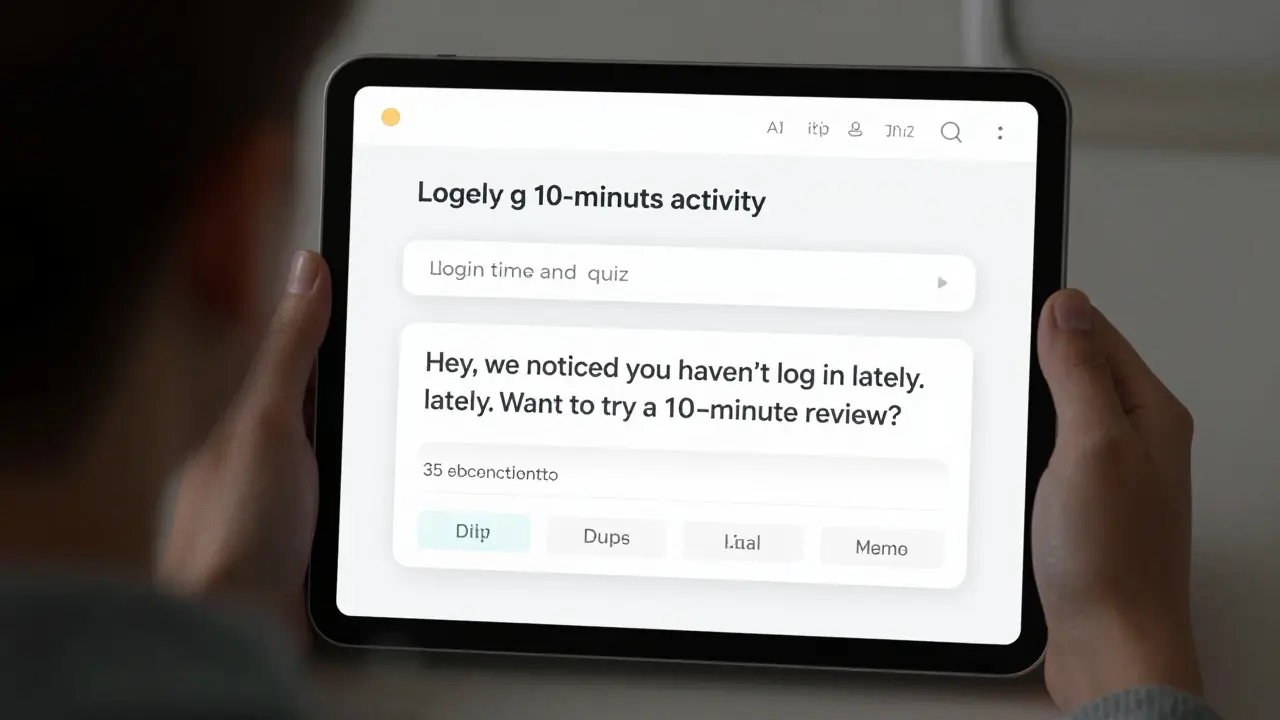
Systems now track login frequency, time spent per module, and even cursor movement on quizzes. If a student who used to spend 45 minutes a day suddenly drops to 5 minutes over three days, the system flags it-not to punish, but to reach out.
Some platforms send a gentle message: “Hey, we noticed you haven’t logged in lately. Want to try a 10-minute review session? We’ll make it quick.” Others connect you with a peer mentor. One community college in Wisconsin reported a 30% drop in dropouts after adding this feature.
It’s not surveillance. It’s care built into code.
What AI Can’t Do (And Why That’s Okay)
AI won’t replace teachers. It can’t build trust. It can’t read a student’s silence and know they’re overwhelmed. It can’t celebrate a breakthrough with genuine excitement.
But it can handle the repetitive stuff: grading multiple-choice, scheduling review sessions, translating content, adjusting difficulty. That frees up teachers to do what humans do best-mentor, inspire, and connect.
One high school teacher in Chicago told me, “I used to spend 15 hours a week grading. Now I spend that time in one-on-one chats with kids who need help. The AI handles the rest.”
Getting Started with AI-Powered Learning
You don’t need to be a tech expert to use AI in learning. Here’s how to start:
- Check if your course platform (Canvas, Moodle, Blackboard) has AI features built in. Many do now.
- Try free tools like Khanmigo (Khan Academy’s AI tutor) or Google’s Study Hall.
- Use AI to review your own work-ask it to explain a concept you don’t understand in simple terms.
- Don’t rely on it for answers. Use it to deepen understanding.
- Give feedback to the system. If a suggestion feels off, say so. AI learns from you too.
The goal isn’t to let machines teach. It’s to let them support you so you can teach yourself better.
What’s Next?
AI in education is still early. We’re moving from static courses to living learning ecosystems. Soon, you’ll be able to simulate a lab experiment, debate history with an AI-generated historical figure, or practice a job interview with a virtual hiring manager-all guided by real-time AI feedback.
But the real win? Students who feel seen. Who get help when they need it. Who aren’t left behind because they’re shy, slow, or speak a different language. That’s what AI is finally helping us build: a learning world that works for everyone.
Can AI really improve learning outcomes, or is it just hype?
Yes, it’s backed by data. A 2024 study from Stanford tracked over 12,000 students using AI-driven adaptive learning systems. Those students improved test scores by an average of 22% compared to peers using traditional online materials. The biggest gains came in math and science, where personalized practice made the most difference. It’s not magic-it’s data-driven adjustments that match how real brains learn.
Is AI tutoring safe for kids and teens?
Reputable educational AI tools are designed with safety in mind. Platforms like Khanmigo and Google’s Study Hall filter inappropriate content, avoid sharing personal data, and don’t allow open-ended chats. They’re built to answer questions, not engage in conversation. Always check if the tool is approved by your school or district. Avoid public AI chatbots like unfiltered versions of ChatGPT for academic use-they can give incorrect or unsafe answers.
Do I need to pay for AI learning tools?
Many powerful tools are free. Khanmigo, Duolingo’s AI tutor, and Google’s Study Hall offer robust features at no cost. Some premium platforms charge for advanced features like personalized study plans or live tutoring sessions, but you don’t need to pay to get real value. Start with free options, see what helps you, then decide if upgrading makes sense.
Can AI help with language learning?
Absolutely. AI tools like Duolingo, Memrise, and Babbel use speech recognition and adaptive algorithms to tailor lessons to your mistakes. If you keep mixing up verb tenses, the system will focus on them. If you’re good at vocabulary but struggle with pronunciation, it’ll give you more speaking drills. One study found learners using AI for 10 minutes a day improved fluency 40% faster than those using apps without AI.
Will AI replace teachers in the future?
No-and that’s a good thing. AI handles repetition: grading, reminders, practice drills. Teachers handle humanity: encouragement, emotional support, critical thinking discussions. The best classrooms now pair AI tools with human mentors. A teacher who uses AI to manage logistics has more time to notice when a student is struggling emotionally or intellectually. That’s the future: tech as a tool, not a replacement.