

You stare at the screen. The cursor blinks. You know what you want to build, but the path from idea to working code feels like wading through mud. You’ve probably heard that senior developers type faster or have some secret muscle memory. That’s a myth. Real speed isn’t about typing; it’s about thinking less and doing more with fewer keystrokes. In 2026, with AI assistants handling boilerplate, the gap between good and great coders is no longer syntax knowledge-it’s workflow mastery.
Efficiency in coding comes down to reducing friction. Every time you pause to remember a function name, search for a library, or debug a simple typo, you break your flow state. Rebuilding that focus takes twenty minutes. The goal of these programming tricks is not just to save seconds here and there, but to protect your mental energy for the hard problems: architecture, logic, and user experience.
What are the most effective programming tricks for beginners?
For beginners, the highest-impact tricks involve mastering keyboard shortcuts in your IDE, learning to use version control (Git) confidently, and understanding how to read error messages rather than ignoring them. These foundational habits prevent small issues from becoming massive roadblocks later in your career.
Mastering the Editor: Beyond Basic Typing
Your Integrated Development Environment (IDE) is your primary tool. If you treat it like a simple text pad, you’re leaving performance on the table. Modern editors like Visual Studio Code, JetBrains IntelliJ, or Neovim are powerful engines designed to predict your next move. The first trick is to stop using the mouse for navigation. Keep your hands on the home row. Use command palettes (usually `Ctrl+Shift+P` or `Cmd+Shift+P`) to access every feature without hunting through menus.
Consider the concept of "multi-cursor editing." Instead of changing a variable name one by one across ten files, select all instances simultaneously. In VS Code, this is often done with `Alt+Click` or `Ctrl+D`. This single action can save minutes of repetitive labor. Another underutilized feature is "refactoring." Never manually rename a function or extract a method. Use the built-in refactoring tools. They update references automatically, ensuring you don’t break dependencies elsewhere in the codebase. This reduces the cognitive load of worrying about side effects.
Furthermore, customize your snippets. If you find yourself writing the same boilerplate for API endpoints or database connections three times a week, create a snippet. Trigger it with a short abbreviation like `api-get` and let the editor expand it into the full structure. This turns complex setup tasks into instant actions.
The Art of Debugging: Find Errors Faster
Debugging is where most developers lose time. The instinctive reaction is to sprinkle `print()` statements everywhere and hope something useful appears. This is inefficient and clutters your code. A superior approach is to use the debugger’s breakpoints and watch variables. Step through your code line by line. Observe how data changes in real-time. This visual inspection reveals logical errors that static reading misses.
In 2026, AI-powered debugging tools have evolved significantly. Tools like GitHub Copilot or Amazon CodeWhisperer can now analyze stack traces and suggest fixes directly within the IDE. However, don’t rely on them blindly. Use them as a second opinion. When an AI suggests a fix, understand *why* it works. This builds your intuition for future problems. Additionally, learn to read logs effectively. Structured logging (JSON format) allows you to filter and search through thousands of entries instantly, pinpointing the exact moment a request failed.
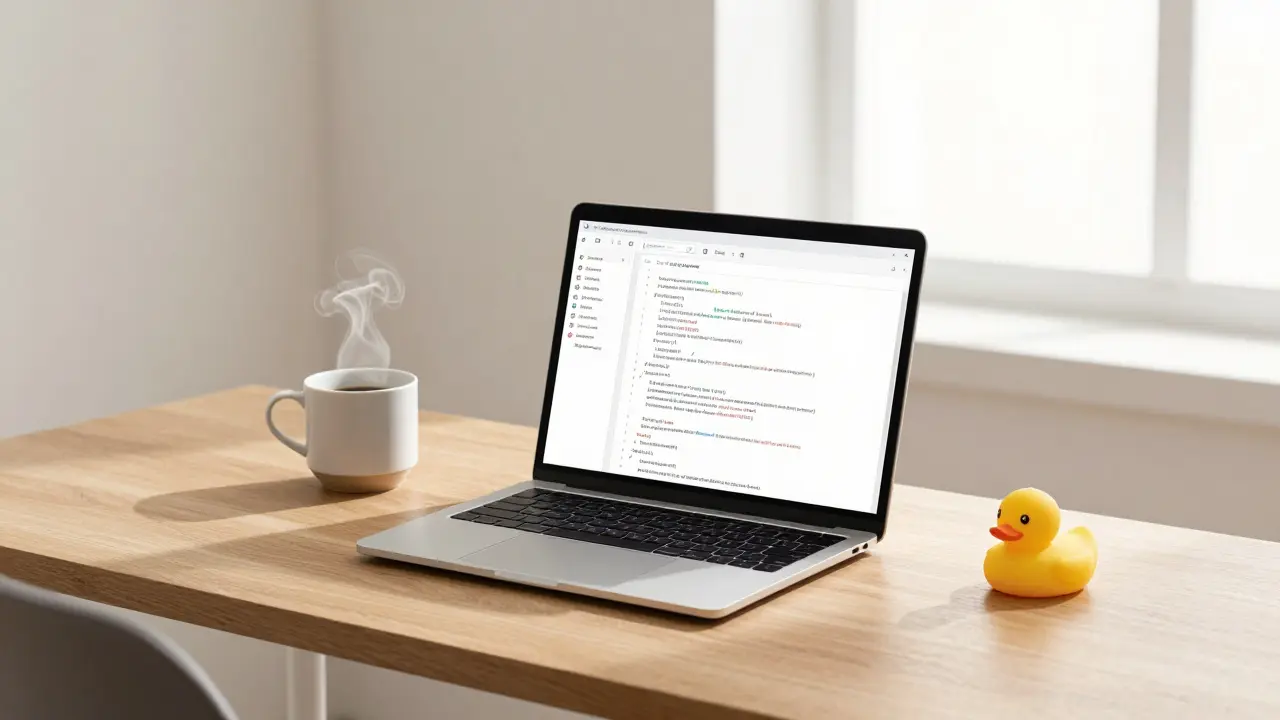
Another critical trick is "rubber duck debugging." Explain your code line-by-line to an inanimate object-or a colleague. Often, the act of verbalizing the logic exposes the flaw before you even finish the explanation. It forces you to slow down and think critically about each step.
Leveraging Automation and Scripts
If you do a task twice, automate it. This rule applies to everything from deploying code to formatting documents. Write shell scripts or Python scripts to handle repetitive operations. For example, if you need to clean up temporary files, generate reports, or run a series of tests, create a script that does it all with one command. This eliminates human error and frees up your brain for creative work.
Pre-commit hooks are another powerful automation trick. Configure your Git repository to run linters and formatters automatically before every commit. This ensures that your code always meets quality standards without manual intervention. It also prevents messy code from entering the shared branch, saving your team hours of review time. Tools like Husky or Pre-commit make this setup straightforward.
Consider using infrastructure-as-code (IaC) tools like Terraform or Ansible for environment setup. Instead of manually configuring servers, define your infrastructure in code. This allows you to spin up identical development environments instantly, eliminating the "it works on my machine" problem. Consistency across environments drastically reduces debugging time related to configuration mismatches.

Optimizing Code Structure for Readability
Clean code is fast code. Not because it runs quicker (though it often does), but because it’s easier to modify. When you return to your code after a month, will you understand it? If not, you’ll waste time re-learning your own logic. Use meaningful variable names. Avoid abbreviations unless they are universally understood (like `id` or `url`). Name functions based on what they *do*, not how they *work*. For example, `calculateTotalPrice()` is better than `calc_price_sum()`.
Adhere to the Single Responsibility Principle (SRP). Each function should do one thing and do it well. Long functions with multiple purposes are hard to test and prone to bugs. Break them down into smaller, composable units. This modularity allows you to reuse components across different parts of your application, reducing duplication.
Consistent formatting matters more than you think. Use automated formatters like Prettier or Black. Don’t debate indentation styles in code reviews; let the tool handle it. This keeps discussions focused on logic and architecture, not aesthetics. Consistent style reduces cognitive load when scanning code, allowing you to spot anomalies faster.
Strategic Use of Libraries and Frameworks
Reinventing the wheel is a classic inefficiency. Before writing a custom solution, check if a robust library exists. Established libraries like Lodash for JavaScript utilities or Pandas for Python data manipulation are optimized for performance and edge cases. They’ve been tested by millions of developers, meaning they’re likely more reliable than your quick hack.
However, be cautious about over-dependence. Importing a heavy framework for a simple task can bloat your application and slow down load times. Evaluate the trade-off between convenience and performance. For small projects, vanilla JavaScript or standard library functions might be sufficient. For large-scale applications, the structure provided by frameworks like React or Django can accelerate development significantly.
Stay updated with the ecosystem, but don’t chase every new trend. Focus on stable, widely-adopted tools. Learning curve costs are real. Spending a week mastering a niche library that only two people use is rarely worth it. Stick to technologies with strong community support and extensive documentation.
Effective Collaboration and Code Reviews
Coding is rarely a solo activity. Efficient collaboration saves time in the long run. Write clear commit messages. Instead of "fix bug," write "Fix null pointer exception in user authentication module." This helps others understand the context without digging into the diff. Use conventional commits to standardize message formats, enabling automated changelog generation.
Conduct thorough code reviews. Don’t just look for syntax errors; check for logic flaws, security vulnerabilities, and maintainability. Provide constructive feedback. Explain why a change is needed, not just that it’s wrong. This educates the author and improves team skills over time. Conversely, receive feedback gracefully. View critiques as opportunities to learn, not personal attacks.
Document your decisions. Use Architecture Decision Records (ADRs) to capture why certain technical choices were made. This prevents future debates about past decisions and provides context for new team members. Documentation doesn’t have to be lengthy; concise notes in the README or inline comments suffice.
| Strategy | Time Saved | Learning Curve | Best For |
|---|---|---|---|
| Keyboard Shortcuts | High | Low | Daily Navigation |
| Automated Testing | Very High | Medium | Long-term Maintenance |
| AI Assistants | Medium | Low | Boilerplate Generation |
| Refactoring Tools | High | Low | Code Restructuring |
Continuous Learning and Adaptation
The tech landscape changes rapidly. What was efficient in 2024 might be obsolete in 2026. Stay curious. Follow industry blogs, attend webinars, and experiment with new tools in side projects. But be selective. Deepen your expertise in core areas rather than skimming the surface of many. Mastery of fundamentals like algorithms, data structures, and system design provides a solid foundation that transcends specific languages or frameworks.
Reflect on your workflow regularly. Identify bottlenecks. Are you spending too much time setting up environments? Is debugging taking longer than coding? Address these pain points systematically. Small improvements compound over time. A 1% increase in daily efficiency leads to significant gains over a year.
Finally, take breaks. Burnout kills productivity. Step away from the screen. Walk outside. Clear your mind. Fresh perspectives often lead to elegant solutions that brute force never could. Efficiency isn’t just about working faster; it’s about working smarter and sustaining that pace long-term.
How can I improve my coding speed without sacrificing quality?
Focus on automation and tooling. Use linting, formatting, and testing tools to catch errors early. Master your IDE’s shortcuts to reduce mechanical delays. Prioritize clean, readable code so that future modifications are quick and less error-prone. Speed comes from confidence in your codebase, not frantic typing.
Are AI coding assistants worth the investment?
Yes, for most developers. AI assistants excel at generating boilerplate, suggesting completions, and explaining complex code. They free up mental bandwidth for higher-level architectural decisions. However, they require careful review to ensure correctness and security. Treat them as junior partners, not autonomous agents.
What is the best way to learn new programming tricks?
Practice deliberately. Pick one new technique per week, such as a specific regex pattern or a Git command. Apply it in a real project. Read other people’s code on platforms like GitHub to see how experienced developers solve common problems. Join communities to discuss challenges and share solutions.
How do I avoid burnout while trying to be more efficient?
Set realistic goals. Efficiency gains are incremental. Take regular breaks using techniques like Pomodoro. Disconnect from work during off-hours. Remember that rest is part of the process. A tired brain makes more mistakes, which ultimately slows you down. Balance intensity with recovery.
Which programming language is best for learning efficiency tricks?
Any language works, but those with strong ecosystems like Python, JavaScript, or Go offer rich tooling. Python has excellent libraries for automation and data processing. JavaScript dominates web development with vast plugin support. Go provides simplicity and fast compilation. Choose the language relevant to your current projects to apply tricks immediately.