
Key Takeaways
- Artificial intelligence allows spacecraft to make real-time decisions without Earth-based control.
- AI processes massive datasets from telescopes like James Webb Space Telescope much faster than humans.
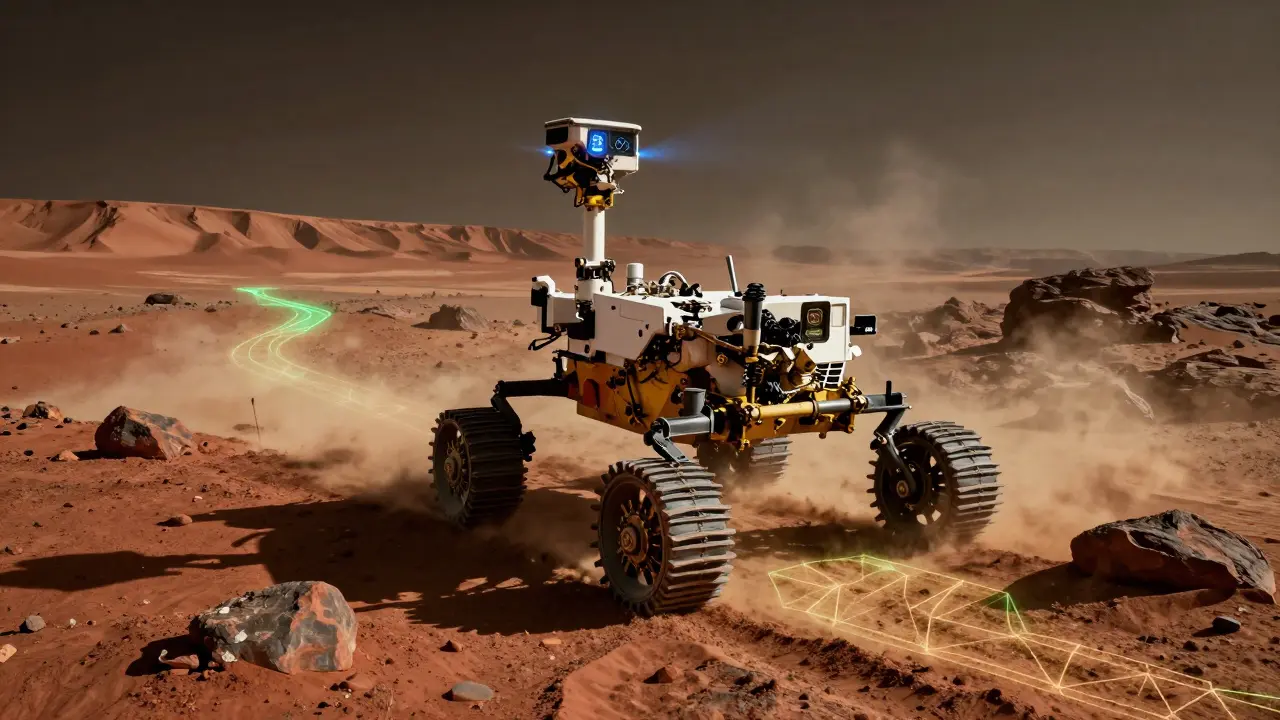
- Autonomous hazard avoidance ensures rovers survive rugged terrain independently.
- Predictive maintenance extends the lifespan of expensive satellites and probes.
- Future missions rely on AI for crew assistance and life support management.
You look up at the night sky and wonder what lies out there. That curiosity drives us, but the distance is the enemy. When you command a rover on Mars, the signal takes between four to twenty-four minutes just to get there. If you try to drive it manually while a rock rolls toward its wheels, it's game over. We simply cannot pilot vehicles in deep space directly. This is why we built machines that think for themselves. The shift happened gradually, moving from pre-programmed scripts to systems that learn and adapt.
Making Decisions Without Delay
The biggest bottleneck in any interplanetary mission is latency. By the time Earth sees trouble, it's often too late to fix it. NASA developed solutions like AEGIS (Autonomous Experimental Generic Intelligent Sensor) to help instruments select targets automatically. Instead of waiting for instructions to point a camera, the system scans an area, identifies interesting geological features, and snaps photos immediately.
This autonomy isn't just theoretical. Think about the Mars Perseverance Rover. When it lands, it uses Terrain Relative Navigation. As it descends through the atmosphere, cameras snap pictures and compare them to onboard maps. If a crater or dangerous ridge appears, the software calculates a new landing spot in seconds. That split-second calculation saved the mission during entry, descent, and landing phases where physics leaves no room for error.
Handling Too Much Data
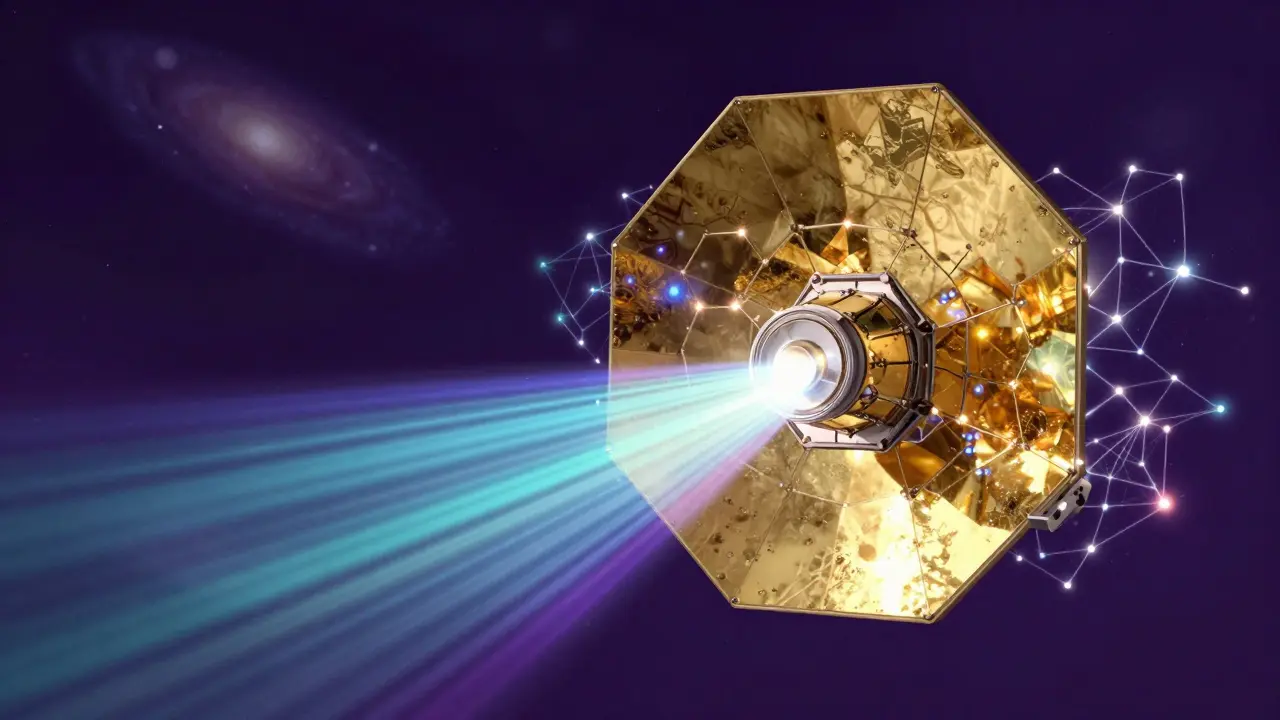
We have reached a point where our sensors see more than we can handle. The James Webb Space Telescope produces petabytes of infrared imagery. Humans can look at thousands of images a year, but computers can review millions. Machine learning algorithms scan these spectra to find chemical signatures of water, methane, or carbon dioxide.
This process speeds up discovery significantly. Before, astronomers spent weeks filtering background noise. Now, neural networks identify anomalies instantly. For example, when searching for exoplanets, patterns in star brightness flicker in ways that indicate an orbiting planet. These signals are tiny dips in light. AI tools like TransitView detect these changes with higher sensitivity than manual inspection, flagging candidates for human verification.
Safety and Predictive Maintenance
Sending hardware into orbit costs billions. Losing a satellite to a component failure is devastating. Engineers now apply predictive maintenance models originally used in aviation. Telemetry streams from satellites monitor temperature, voltage, and radiation exposure constantly. Algorithms look for subtle drifts in performance that precede a total failure.
If a solar panel degrades faster than expected, the system adjusts power allocation automatically. It keeps essential systems running while shutting down non-critical functions. On the International Space Station, smart sensors track air quality and equipment health. In 2024 alone, these systems prevented several potential fire hazards by detecting battery irregularities before temperatures spiked. Keeping hardware alive saves money and protects the astronauts aboard.
Navigating Complex Environments
Getting to the Moon is easy compared to navigating asteroid fields or debris zones. Low Earth Orbit is becoming crowded. There are tens of thousands of pieces of debris larger than three centimeters. Collision avoidance used to require ground control to calculate safe trajectories manually.
Now, spacecraft use orbital mechanics combined with AI to dodge threats. A commercial satellite might receive a conjunction warning. Its onboard computer plots a maneuver to drift out of the way without waiting for radio confirmation. This autonomy prevents catastrophic chain reactions known as Kessler Syndrome. It ensures we can keep launching rockets without turning low orbit into a minefield.
Supporting Long-Distance Crewed Missions
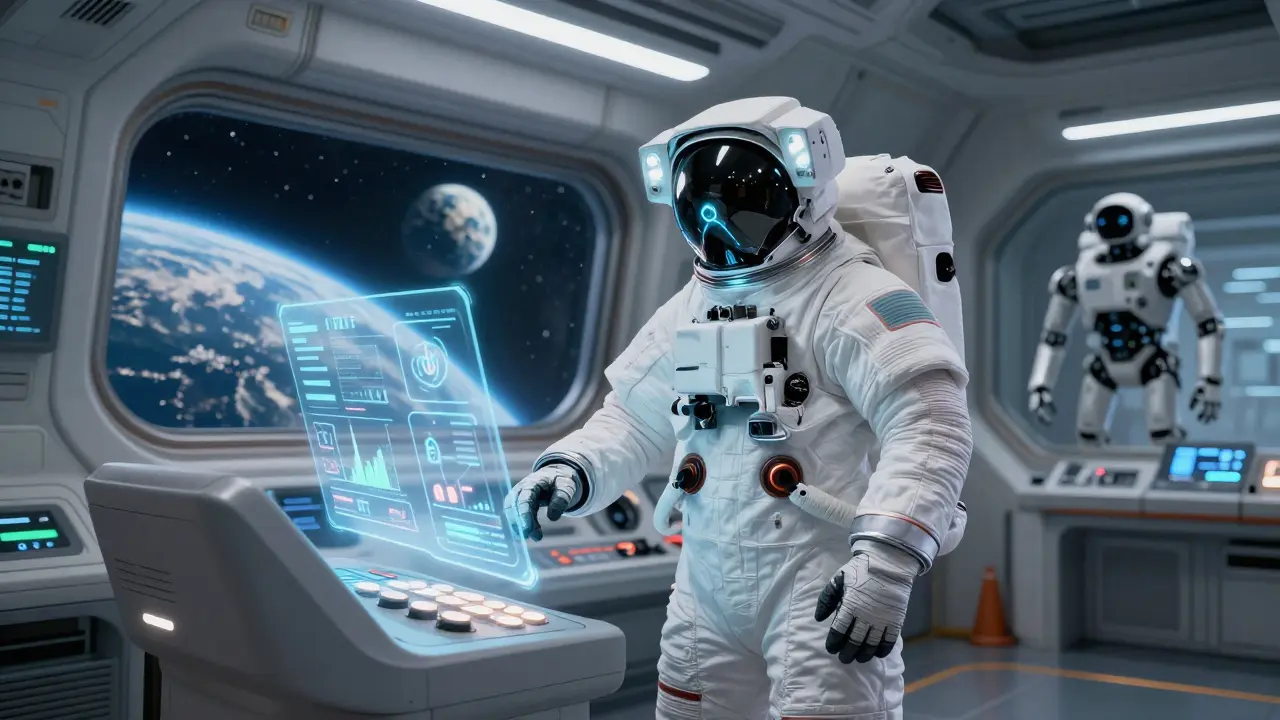
Missions to Mars will last years. Astronauts can't rely solely on Houston for medical advice or repair instructions. Voice interfaces and digital co-pilots provide immediate support. Imagine a technician facing a hydraulic leak. They ask an onboard assistant, upload diagnostic images, and receive a step-by-step repair guide tailored to their specific ship layout.
These systems also manage life support. Closed-loop ecological systems recycle water and air. Algorithms regulate humidity, CO2 scrubbing rates, and plant growth conditions in hydroponic bays. The goal is to stabilize these loops so small errors don't cascade into life-threatening situations. Training these models uses simulations run on Earth years before launch, ensuring reliability when the crew leaves Earth's protection.
| Domain | Primary AI Application | Benefit |
|---|---|---|
| Rover Operations | Hazard Avoidance | Safe pathfinding on alien surfaces |
| Astrophysics | Data Classification | Faster identification of celestial bodies |
| Orbital Safety | Collision Detection | Reduced risk of satellite fragmentation |
| Human Health | Biomonitoring | Real-time health assessment for astronauts |
Challenges and Ethical Considerations
Reliance on technology brings risks. If an algorithm misclassifies a rock as safe ground, the rover crashes. We call this hallucination in the context of machine vision. Redundancy is mandatory. Critical systems have backup rules hardcoded into the silicon, independent of the learning layer.
There is also the question of liability. If an autonomous agent damages a heritage monument on the Moon, who is responsible? Legal frameworks are still catching up to the technology. As we push further into autonomy, protocols must define boundaries. Machines make suggestions; humans make final strategic calls. We do not want rogue actors in sensitive regions of the solar system.
Looking ahead, the integration is only going deeper. Commercial ventures aim to mine asteroids. Those operations need fully self-sustaining fleets. Robots will extract resources and refine materials before shipping them back. The economics of space mining depend on automation reducing labor costs to near zero. It transforms how we view the economy beyond our home planet.
Does artificial intelligence replace human engineers?
No, AI acts as a tool for augmentation rather than replacement. Engineers design the systems and oversee critical decisions.
Can AI detect life on other planets?
AI analyzes biological markers in atmospheric data, increasing the chances of spotting biosignatures in spectral readings.
What happens if the AI malfunctions in deep space?
Hardware includes fail-safe modes that revert to basic operational commands until human intervention is possible.
Which space agency uses the most AI?
NASA has been a pioneer, utilizing AI in rovers, telescope data processing, and flight trajectory calculations.
Is AI safe enough for manned missions?
Yes, when layered with redundant checks and human oversight, it provides essential support for long-duration flights.