
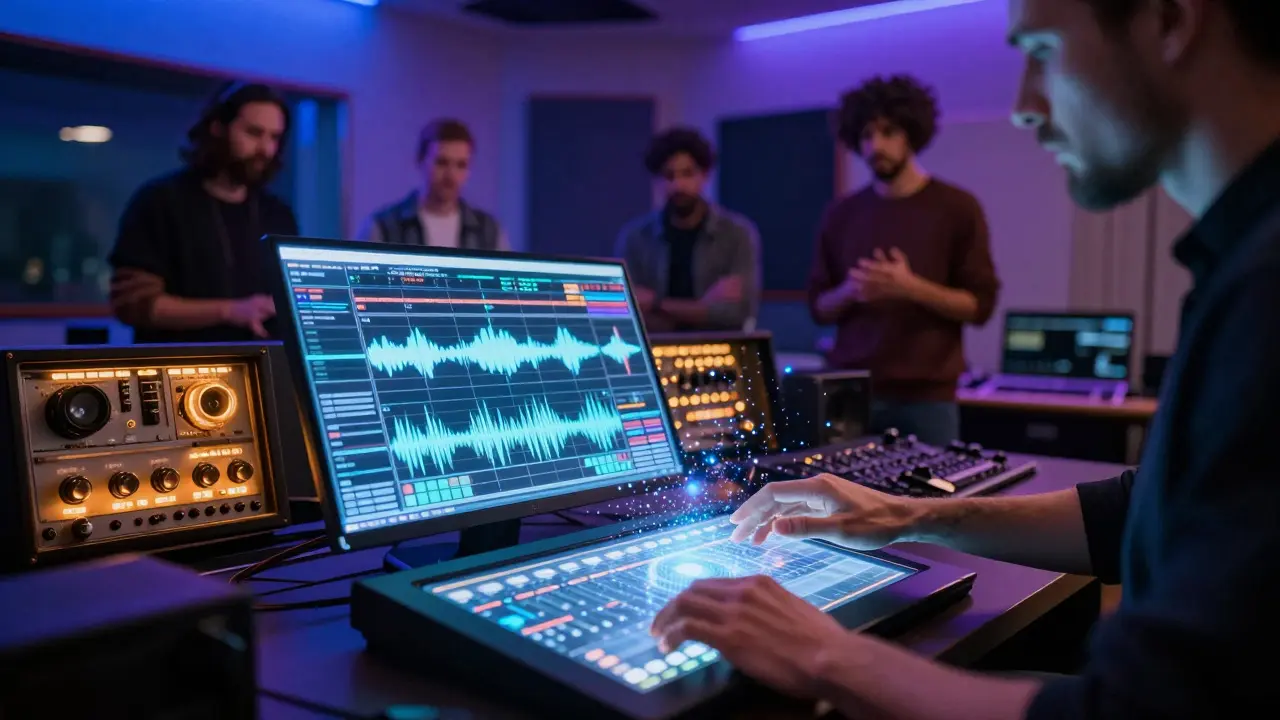
Imagine waking up to a playlist where every song feels like it was written specifically for your mood, yet none of them were composed by a human. This isn't science fiction; it's Tuesday morning for millions of listeners. Artificial Intelligence has moved from being a novelty tool for auto-tune to the engine room of the global music economy. In 2026, AI doesn't just assist musicians; it co-creates, curates, and even challenges the very definition of authorship.
The shift is profound. We are no longer talking about simple pitch correction or basic drum loops. We are discussing Generative Audio Models, which can synthesize full tracks from text prompts, and Predictive Analytics that dictate what gets played on radio and streaming platforms before a human ever hears the demo. For artists, this means a new set of tools and a new set of threats. For listeners, it means an infinite library of personalized soundscapes. Let’s break down how this technology is actually changing the game right now.
From Assistant to Co-Creator: The Production Shift
Gone are the days when AI in the studio meant using a plugin to remove background noise. Today, Digital Audio Workstations (DAWs) are integrated with deep learning engines that suggest chord progressions, mix levels, and even lyrical themes based on historical data. Producers use these tools to speed up the creative process, turning hours of manual mixing into minutes of refinement.
- Stem Separation: Tools powered by neural networks can isolate vocals, drums, and bass from a final track instantly. This allows producers to remix old hits or sample specific elements without needing the original session files.
- Virtual Instruments: AI-driven synthesizers learn the playing style of a user and predict the next note, creating a seamless flow between human intent and machine execution.
- Mastering Automation: Instead of hiring a mastering engineer for $500 per track, artists use AI mastering services that analyze loudness, tonal balance, and spatial audio in real-time.
This efficiency has lowered the barrier to entry. A bedroom producer in Lagos can now achieve a sonic quality that previously required a million-dollar studio in Los Angeles. However, this also raises a question: if the machine does 80% of the heavy lifting, where does the human soul fit in? Most industry insiders argue that AI handles the technical perfection, leaving humans to provide the emotional narrative and cultural context.
The Streaming Algorithm: Curating Your Reality
You think you choose what you listen to, but the algorithm thinks otherwise. Major streaming platforms rely heavily on Machine Learning to power their recommendation engines. These systems don't just look at what you've listened to; they analyze metadata, tempo, key, energy level, and even the time of day you're listening.
In 2026, these algorithms have become sophisticated enough to create "infinite" playlists. If you like lo-fi hip hop, the AI doesn't just recommend similar songs; it generates variations of those songs tailored to your specific retention patterns. If you drop out of a song at the chorus, the algorithm learns that you prefer shorter intros or different bridge structures, and it adjusts future recommendations accordingly.
| Feature | Human Curator | AI Algorithm |
|---|---|---|
| Discovery Speed | Slow, requires active listening | Instant, processes millions of data points |
| Personalization Depth | Generalized moods/themes | Micro-behavioral patterns (e.g., skip rates) |
| Cultural Context | High understanding of trends/history | Low, relies on statistical correlation |
| Bias Risk | Subjective taste/preference | Data bias (reinforces popular genres) |
The result is a feedback loop. Listeners stay within their comfort zones because the AI keeps serving them content that matches their past behavior. While this increases engagement metrics, it can stifle true discovery. Artists who deviate from standard structural norms often struggle to get picked up by the algorithm unless they first gain traction through social media virality.
The Copyright Conundrum: Who Owns the Sound?
This is the biggest headache in the industry right now. When an AI model trained on 10 million copyrighted songs generates a new melody, who owns it? The artist who prompted it? The company that built the model? Or the original artists whose work was used for training?
In 2026, legal frameworks are still catching up. Several high-profile lawsuits have settled out of court, establishing precedents that require Provenance Tracking. This means AI-generated tracks must carry metadata tags indicating the source datasets used. If a generated song sounds too close to a specific artist's style, royalties may need to be split.
Major labels are responding by investing in their own proprietary AI models, trained exclusively on their catalog. This creates a walled garden where AI-generated music is safe from infringement claims but also limits the diversity of available styles. Independent artists, meanwhile, are forming collectives to demand fair compensation for their data usage, arguing that their life's work shouldn't be free fuel for corporate algorithms.
Monetization Beyond the Stream
Streaming payouts have stagnated for years, leading many artists to seek alternative revenue streams. AI is opening new doors here. Imagine licensing a character's theme song for a video game, where the AI dynamically generates the music based on the player's actions. The composer gets paid a royalty for every second the music plays, regardless of whether it's a boss fight or a peaceful village scene.
Sync licensing is another area seeing massive growth. Film and TV editors use AI to search through libraries of music by mood, tempo, and instrument. What used to take weeks of digging through crates now takes seconds. This has increased the volume of sync deals significantly, benefiting mid-tier artists who might not have the budget for major marketing campaigns.
Furthermore, fan engagement is evolving. AI-powered chatbots allow fans to interact with virtual avatars of their favorite artists. These avatars can answer questions, perform live sets in VR spaces, and even release exclusive AI-assisted demos. It’s a way to maintain a connection with fans when the human artist is off the road.
The Future of Live Performance
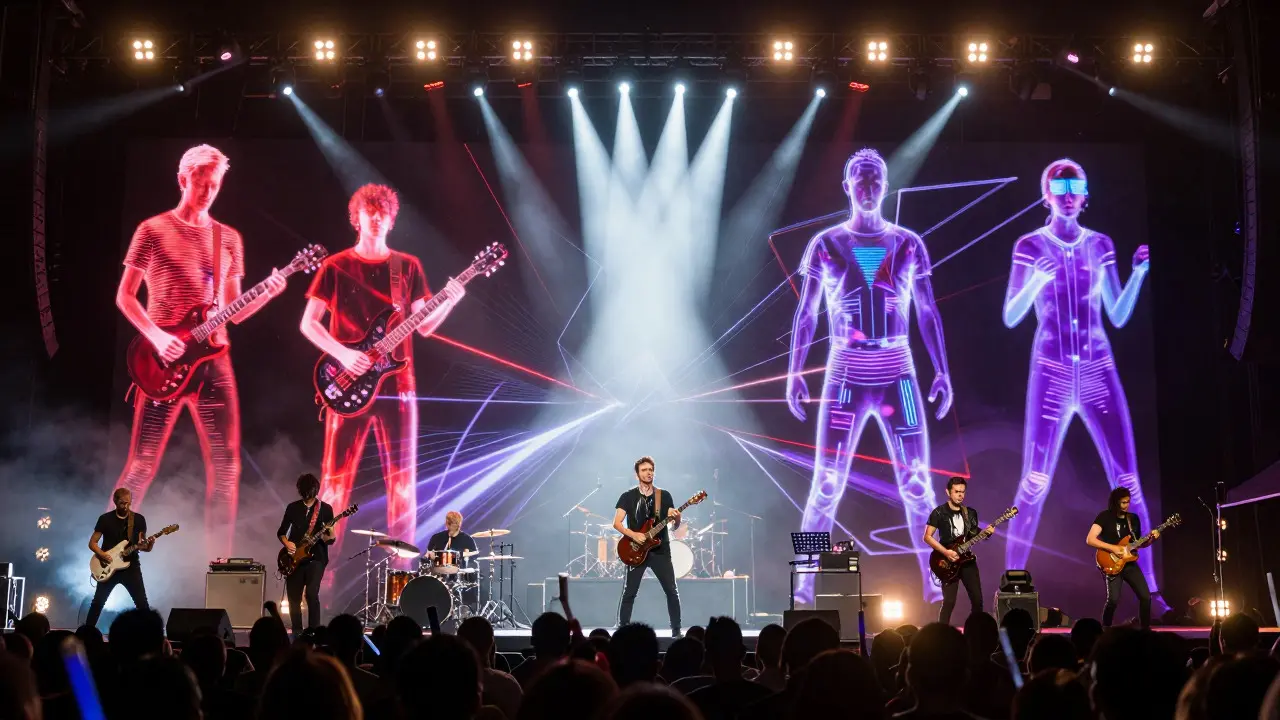
Live shows are the last bastion of purely human experience, but even that is changing. Augmented Reality (AR) concerts use AI to project visuals that react to the band's performance in real-time. If the drummer hits harder, the visual intensity increases. If the vocalist goes higher, the colors shift.
Some artists are experimenting with hybrid performances, where half the band is on stage and the other half is generated by AI in real-time. This allows for complex arrangements that would be impossible for a small group to play live. Critics call it gimmicky, but fans seem to love the spectacle. The line between the digital and physical is blurring faster than anyone predicted.
Practical Tips for Navigating the AI Music Landscape
If you’re an artist, producer, or listener, here’s how to make sense of it all:
- For Artists: Use AI as a safety net, not a crutch. Keep your core creative identity human. Document your creative process to prove originality in case of copyright disputes.
- For Producers: Learn prompt engineering. Knowing how to effectively communicate with AI tools will become as important as knowing how to operate a mixer.
- For Listeners: Don’t let the algorithm box you in. Actively seek out new genres and artists outside your usual preferences to keep your recommendation pool diverse.
- For Investors: Look at companies building infrastructure for AI music rights management. The tech is there; the legal and business frameworks are the next big opportunity.
The music industry isn't dying; it's mutating. AI is forcing us to redefine creativity, ownership, and value. Those who adapt will thrive, while those who resist will find themselves increasingly irrelevant in a world where music is as abundant as air.
Is AI replacing human musicians?
Not entirely. AI excels at technical precision and pattern recognition, but human musicians bring emotional nuance, cultural context, and improvisational spontaneity. The trend is toward collaboration, where AI handles repetitive or complex technical tasks, allowing humans to focus on artistic expression.
Do I need permission to use AI-generated music in my podcast?
It depends on the tool. Some AI platforms grant commercial rights for a subscription fee, while others retain ownership. Always check the terms of service. Additionally, ensure the AI tool uses licensed training data to avoid potential copyright infringement from the source material.
How do streaming algorithms decide what to recommend?
They analyze collaborative filtering (what similar users liked), content-based filtering (metadata like genre and tempo), and behavioral signals (skips, repeats, saves). In 2026, these systems also incorporate real-time context like location and time of day to refine suggestions.
Can AI write lyrics that resonate emotionally?
Yes, but with caveats. AI can mimic poetic structures and rhyme schemes perfectly. However, deeply personal or culturally specific narratives often require human input to feel authentic. Many successful AI-assisted songs use AI for structure and meter, while humans craft the core emotional message.
What is the impact of AI on music royalties?
The impact is currently uncertain. As AI-generated music becomes more common, the pie of streaming revenue may be diluted among more tracks. However, AI is also increasing total consumption by making discovery easier. The long-term effect on individual artist earnings remains a subject of intense debate and legal negotiation.