

Five years ago, if you asked someone what e-learning looked like, they’d picture a static video lecture, a PDF quiz, and maybe a discussion forum that nobody used. Today, it’s something else entirely. AI doesn’t just support e-learning-it’s reshaping how people learn, when they learn, and even why they stick with it. If you’ve ever been recommended a lesson because you struggled with a concept, or got instant feedback on your writing that felt like a human tutor was watching over your shoulder, that’s AI at work. And it’s not science fiction anymore. It’s happening right now, in classrooms, corporate training rooms, and living rooms across the world.
Personalized Learning Paths Are No Longer a Luxury
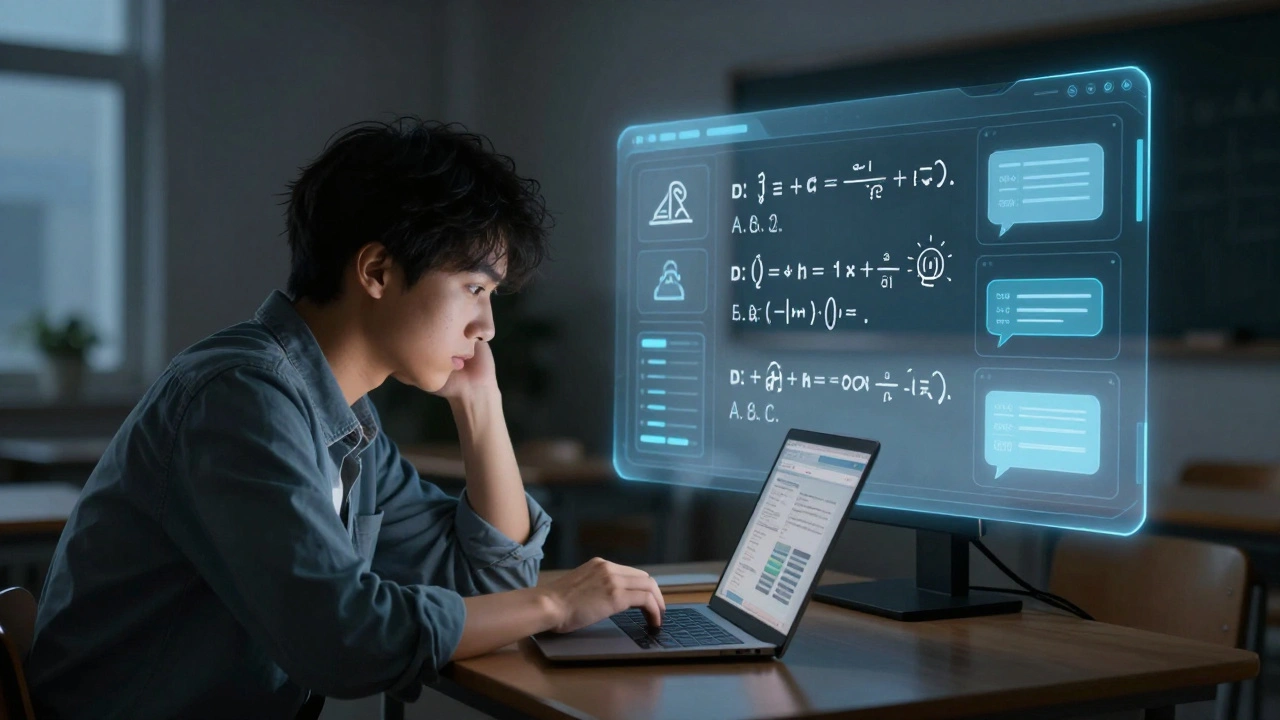
One-size-fits-all courses are dead. AI doesn’t treat every learner the same. It watches what you click on, how long you pause on a question, whether you rewatch a video, and even how fast you type your answers. Then it adjusts. If you’re acing algebra problems, the system skips ahead. If you keep missing the same type of equation, it serves up three different explanations-video, text, and interactive simulation-until it clicks.
Platforms like Khan Academy and Duolingo have been using this for years. But now, even corporate LMS systems like Cornerstone and SAP Litmos are integrating AI to track employee progress and auto-generate custom learning paths. A nurse in Texas learning new protocols won’t get the same modules as a sales rep in Berlin learning negotiation skills. The AI knows their roles, their past performance, and even their learning speed.
AI Tutors That Never Sleep
Think about the last time you got stuck on a problem at 2 a.m. You couldn’t find a tutor, your classmates were asleep, and the textbook wasn’t helping. That’s where AI tutors step in. Tools like ChatGPT-powered tutors, Squirrel AI, and Carnegie Learning’s IntelliTutor don’t just give answers-they guide you through the thinking process. Ask why a sentence is grammatically wrong, and the AI doesn’t just highlight it. It breaks down subject-verb agreement, shows you five examples, and asks you to fix a similar sentence yourself.
These systems use natural language processing to understand not just what you say, but what you mean. If you type, “I don’t get this,” the AI doesn’t repeat the same lesson. It asks, “Which part feels confusing? The formula, the example, or the vocabulary?” That level of nuance used to require a human teacher. Now, it’s built into the software.
Real-Time Feedback That Actually Helps
Grading essays used to mean waiting days for a professor’s comments-often vague, like “needs more analysis.” AI changes that. Tools like Turnitin’s Draft Coach and Grammarly’s Education suite now analyze structure, tone, clarity, and argument flow in real time. They don’t just catch typos. They point out when your thesis is weak, when you’re repeating ideas, or when your evidence doesn’t support your claim.
In a 2024 study by Stanford’s Graduate School of Education, students using AI feedback improved their writing scores by 27% over a single semester compared to those who only got final grades. Why? Because feedback came while they were still working, not after they’d moved on. It’s like having a writing coach sitting beside you, whispering suggestions as you type.
Automating the Boring Stuff So Teachers Can Teach
Teachers aren’t being replaced-they’re being freed up. AI handles the repetitive tasks: grading multiple-choice quizzes, tracking attendance, sending reminders, organizing resources. That means educators spend less time on paperwork and more time doing what humans do best: mentoring, sparking discussion, and reading between the lines of a student’s confusion.
At Minneapolis Public Schools, teachers using an AI-powered platform called EduBot reported a 40% drop in time spent on administrative tasks. One high school English teacher told her district, “I used to spend weekends grading 120 essays. Now I spend that time having one-on-one chats with students who need help. The difference in their confidence is obvious.”
Accessibility Isn’t an Afterthought-It’s Built In
AI is making learning accessible in ways that were impossible before. Real-time captioning for live lectures? Done. Text-to-speech for students with dyslexia? Standard. Translation of course materials into 30+ languages? Automatic. AI doesn’t just adapt content-it adapts delivery.
For non-native English speakers, tools like Microsoft’s Immersive Reader now translate, simplify, and read aloud content while preserving the original meaning. For students with visual impairments, AI describes images in lectures, turning graphs and diagrams into spoken narratives. This isn’t optional anymore. It’s expected. And it’s making education fairer.
The Dark Side: Overreliance and Bias
But AI isn’t perfect. Some students now copy AI-generated answers without understanding them. Others rely on it so much they forget how to think independently. In one university survey, 32% of students admitted to using AI to write entire assignments without citing it.
There’s also bias. If an AI tutor was trained mostly on data from urban, English-speaking students, it might not understand regional dialects, cultural references, or different learning styles. A student from rural Mississippi might get feedback that assumes they know city slang. An AI grading system might penalize creative phrasing because it was trained on rigid academic templates.
The fix isn’t to ditch AI-it’s to use it wisely. Schools that train students to question AI outputs, verify sources, and use AI as a tool-not a crutch-are seeing the best results. Critical thinking isn’t being replaced. It’s being upgraded.
What’s Next? AI That Learns From You
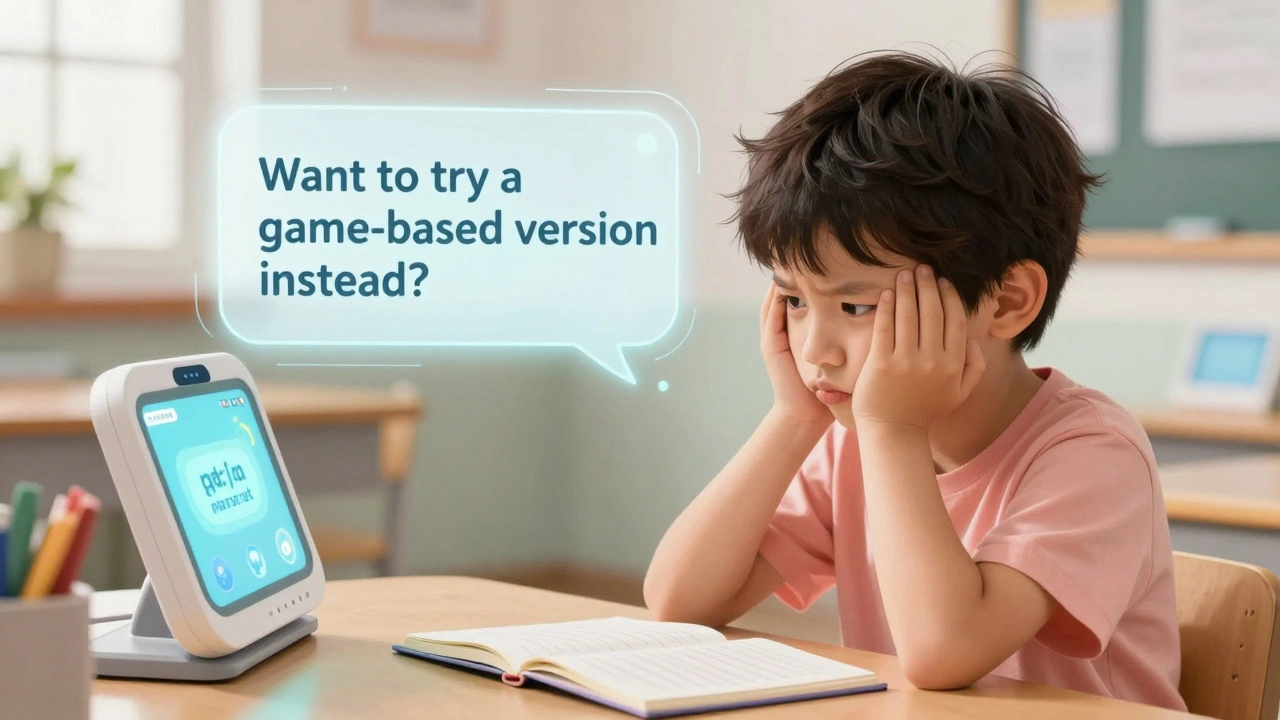
The next leap isn’t just smarter feedback. It’s AI that learns your emotional state. Cameras and microphones (with consent) can now detect frustration, boredom, or confusion through facial expressions and voice tone. If you’re sighing after five failed attempts at a problem, the system might pause and say, “This is tough. Want to try a game-based version instead?”
Companies like Affectiva and Cognii are already testing this in pilot programs. Imagine a child with anxiety who shuts down during tests. The AI notices, switches to a low-pressure mode, and offers calming breathing exercises before continuing. That’s not just education-it’s emotional support.
And it’s not far off. By 2026, over 70% of K-12 and higher education platforms will include some form of emotion-aware AI, according to Gartner’s 2025 EdTech Forecast.
Final Thought: AI Doesn’t Replace Teachers. It Empowers Them.
The most successful e-learning environments aren’t the ones with the fanciest AI. They’re the ones where humans and machines work together. The AI handles scale, speed, and repetition. The teacher handles meaning, motivation, and humanity.
If you’re a student, use AI to clarify, practice, and explore. If you’re a teacher, use it to see what your students really need. If you’re a parent, ask how the school is using AI-not to replace learning, but to make it deeper, fairer, and more personal.
E-learning isn’t just changing. It’s becoming more human-because AI, when used right, helps us remember what matters most: that learning is about people, not just pixels.
Can AI really replace human teachers in e-learning?
No, AI can’t replace human teachers. It can handle grading, feedback, and personalized pacing, but it can’t build trust, inspire curiosity, or understand emotional struggles the way a teacher can. The best e-learning systems use AI to free up teachers so they can focus on mentoring and meaningful interaction.
Is AI in e-learning only for wealthy schools or companies?
Not anymore. Many AI tools are now free or low-cost. Platforms like Khan Academy, Duolingo, and Google’s AI-powered Classroom features are available to anyone with an internet connection. Even public schools in rural areas are using open-source AI tools to personalize learning without big budgets.
How do I know if an AI learning tool is trustworthy?
Look for transparency. Does the provider explain how the AI works? Do they share what data they collect and how it’s used? Avoid tools that promise 100% accuracy or claim to know exactly what you need without any input. Good AI invites questions, doesn’t silence them.
Can AI help students with learning disabilities?
Yes, and it’s one of its most powerful uses. AI can convert text to speech, simplify complex language, provide real-time captions, and adapt pacing for students with dyslexia, ADHD, or autism. Tools like Microsoft Immersive Reader and Read&Write by Texthelp have helped thousands of students succeed where traditional methods failed.
Do I need to be tech-savvy to use AI-powered e-learning?
No. Most AI tools are designed to be invisible-meaning they work in the background. You just click, type, or speak. If you can use a smartphone or a web browser, you can use AI-powered learning. The interface stays simple; the intelligence is hidden.
What’s the biggest mistake people make with AI in learning?
Treating AI as a shortcut. Copying answers, skipping practice, or relying on AI to think for you defeats the purpose. The goal isn’t to get the right answer-it’s to understand how to get it. Use AI to learn, not to avoid learning.
As AI keeps improving, the real question isn’t whether it will change education. It already has. The question is whether we’ll use it to make learning more inclusive, more thoughtful, and more human-or just faster and cheaper. The choice still belongs to us.