
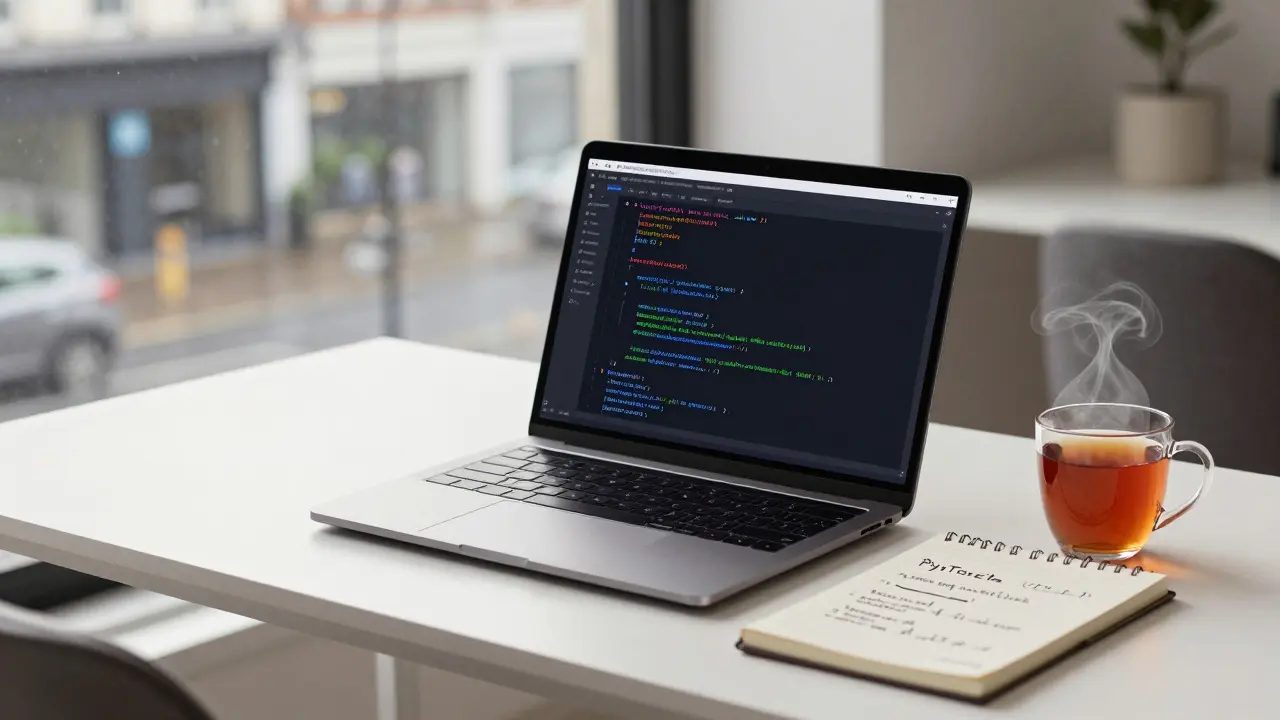
It used to be that if you wanted to build an artificial intelligence system, you needed a PhD in mathematics and access to supercomputers. That era is over. Today, the barrier to entry has shifted from pure math to practical coding skills. But here is the catch: writing code for AI isn't exactly like building a standard website or a mobile app. It requires a different mindset, specific languages, and a deep understanding of how data moves through algorithms.
If you are looking to break into this field, you need to know which tools actually matter in 2026. You also need to understand why certain libraries dominate the industry while others fade away. This guide cuts through the noise to show you what coding for AI really looks like right now.
The Language Choice: Why Python Rules the Roost
When people talk about coding for AI, they almost always start with Python. It’s not just a trend; it’s the industry standard. Python makes up more than 80% of all AI-related code repositories on GitHub. Why? Because it reads like plain English. In C++ or Java, you might spend twenty lines of code setting up memory management. In Python, you do it in one line, if at all.
Python is a high-level, interpreted programming language known for its readability and extensive library support for data science and machine learning. Also known as Python 3, it was first released in 1991 but saw a massive resurgence in the 2010s due to the AI boom. Its dynamic typing allows developers to prototype models quickly without getting bogged down in syntax errors.That said, Python isn’t the only player. If you are working on high-performance computing or embedded systems where every millisecond counts, you might look at C++. TensorFlow, for instance, has a C++ backend because speed matters when training massive neural networks. However, for most beginners and even many professionals, Python is the gateway drug. It lets you focus on the logic of the algorithm rather than the mechanics of the language.
You should also keep an eye on Julia. Launched in 2012, Julia was designed specifically to solve the "two-language problem"-where scientists prototype in Python but rewrite in C++ for production. Julia aims to do both fast. While its ecosystem is smaller than Python’s, it’s growing rapidly in academic and scientific circles.
Essential Libraries and Frameworks
Knowing Python syntax is just the starting point. To actually build AI, you need frameworks. These are pre-written packages that handle the heavy lifting of matrix operations and gradient calculations. Without them, you’d be reinventing the wheel every time you tried to train a model.
| Framework | Primary Use Case | Learning Curve | Community Size |
|---|---|---|---|
| PyTorch | Research, Deep Learning, Dynamic Graphs | Medium | Very Large (Academic & Industry) |
| TensorFlow | Production Deployment, Mobile AI | Steep | Large (Enterprise) |
| Scikit-learn | Traditional Machine Learning (Regression, Classification) | Low | Massive |
| Keras | High-level API for Neural Networks | Low | Large |
PyTorch is an open-source machine learning framework developed by Meta, favored for its intuitive interface and dynamic computation graphs. It has become the go-to choice for researchers because it feels like native Python. When you debug a PyTorch model, you can use standard Python debugging tools. This flexibility makes it easier to experiment with new architectures.
TensorFlow is an end-to-end open-source platform for machine learning developed by Google, known for its scalability and strong deployment tools like TensorFlow Lite. Despite PyTorch’s rise, TensorFlow remains dominant in enterprise environments. If you want to deploy your model to millions of Android phones or run it on edge devices, TensorFlow’s toolchain is still unmatched.
Don’t ignore Scikit-learn is a free software machine learning library for the Python programming language, featuring various classification, regression, and clustering algorithms. Before jumping into deep learning, you should master traditional machine learning. Scikit-learn handles tasks like linear regression, decision trees, and random forests with incredible ease. It’s the bread and butter of data science interviews and real-world business problems.
Data Handling: The Real Work Begins Here
A common misconception is that AI coding is mostly about designing complex neural networks. In reality, 70-80% of your time will be spent cleaning and preparing data. Garbage in, garbage out. If your dataset is messy, no amount of fancy coding will save your model.
You need to get comfortable with Pandas is a software library written for the Python programming language for data manipulation and analysis, providing data structures like DataFrames. Pandas allows you to load CSV files, Excel sheets, or SQL databases and manipulate them with ease. You’ll be filtering rows, handling missing values, and merging datasets constantly.
Alongside Pandas, NumPy is a fundamental package for scientific computing with Python, supporting large, multi-dimensional arrays and matrices along with a collection of mathematical functions. NumPy is the engine under the hood. Almost every other AI library, including TensorFlow and PyTorch, relies on NumPy for efficient numerical operations. Understanding how arrays work in NumPy is non-negotiable for anyone serious about AI.
Visualization is another critical skill. You need to see patterns before you feed data into a model. Libraries like Matplotlib and Seaborn help you create histograms, scatter plots, and heatmaps. If you can’t visualize the distribution of your data, you won’t know if your model is biased or if your features are correlated.

Understanding the Core Concepts
Coding for AI isn’t just about memorizing library functions. You need to grasp the underlying concepts. Otherwise, you’re just copying and pasting code without understanding why it works-or fails.
- Linear Algebra: AI models operate on vectors and matrices. You don’t need to be a mathematician, but you must understand dot products, matrix multiplication, and eigenvalues. These operations are the building blocks of neural networks.
- Calculus: Specifically, derivatives and gradients. Training a model involves minimizing error using gradient descent. If you don’t understand how gradients flow backward through a network, debugging will be a nightmare.
- Probability and Statistics: AI is inherently probabilistic. You need to understand distributions, Bayes’ theorem, and statistical significance to evaluate your model’s performance accurately.
Many bootcamps skip these fundamentals, focusing only on coding. This creates developers who can build a model but can’t explain why it’s overfitting. Take the time to learn the math. It doesn’t have to be rigorous proofs, but conceptual understanding is vital.
From Notebook to Production
Most tutorials stop once the model achieves good accuracy in a Jupyter Notebook. But in the real world, a notebook is just a scratchpad. You need to move your code into a production environment.
This means writing modular Python scripts, not notebooks. You need to structure your code so it can be tested, version-controlled, and deployed. Tools like Git are essential. You should also learn about containerization using Docker. Docker is a set of platform as a service products that use OS-level virtualization to deliver software in packages called containers. Docker ensures that your AI model runs the same way on your laptop as it does on a cloud server. Dependency hell is real, and Docker solves it.
Cloud platforms like AWS, Google Cloud, and Azure offer specialized services for AI. AWS SageMaker, for example, automates much of the training and deployment process. Knowing how to integrate your code with these APIs is a valuable skill. Companies don’t just want models; they want scalable, reliable services.
Ethics and Bias in Code
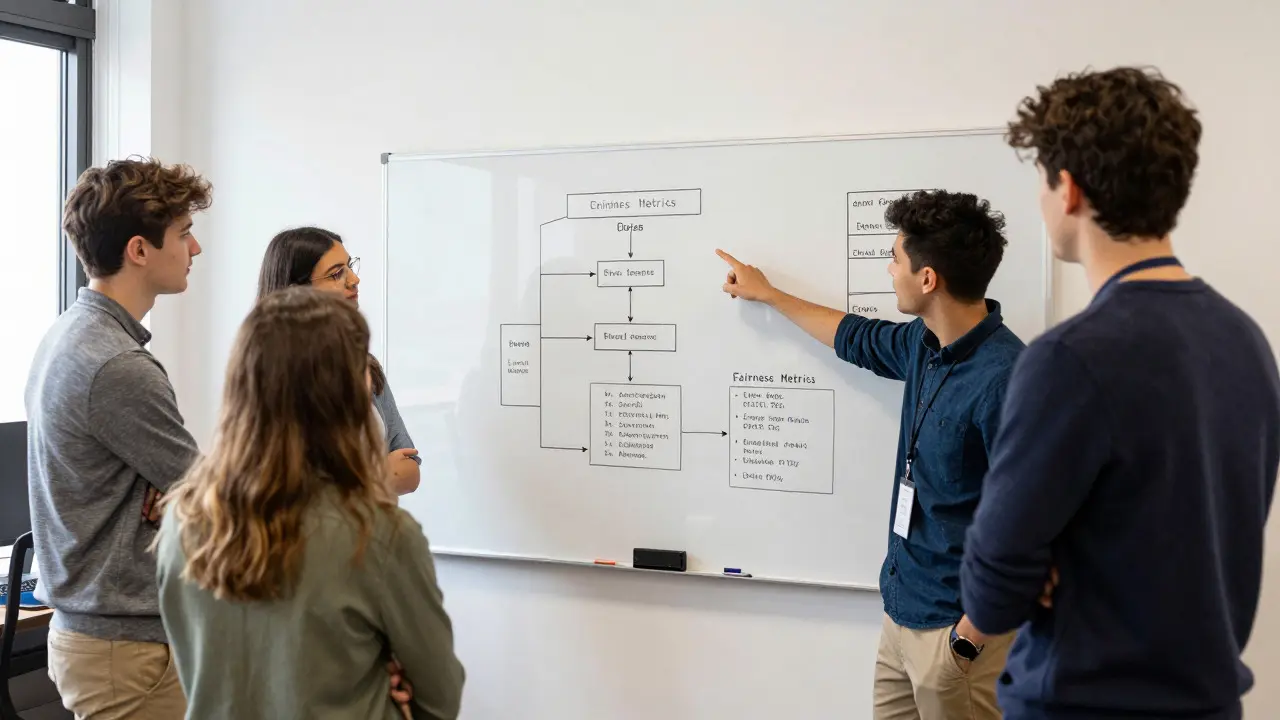
As AI becomes more pervasive, the ethical implications of your code grow. Bias in data leads to bias in outcomes. If you train a hiring algorithm on historical data from a male-dominated industry, it will likely discriminate against women. Your code amplifies whatever is in your data.
Responsible AI coding involves auditing your datasets for representation gaps. It means testing your models for disparate impact across different demographic groups. Libraries like Fairlearn and Aequitas help quantify bias. Incorporating these checks into your workflow isn’t just good ethics; it’s good business. Biased models fail in the real world and damage brand reputation.
Next Steps for Aspiring AI Developers
Start small. Don’t try to build the next ChatGPT on day one. Begin with simple projects: predict house prices using linear regression, classify images of cats and dogs using a convolutional neural network, or analyze sentiment in tweets. Build a portfolio of these projects. Show your code on GitHub. Write blog posts explaining your approach.
Join communities. Reddit’s r/MachineLearning, Kaggle competitions, and local meetups are great places to learn from others. Collaboration accelerates learning. Finally, stay curious. The field changes rapidly. New architectures emerge, old ones fall out of favor. Continuous learning is the only constant in AI development.
Do I need a degree in computer science to code for AI?
No, you don't strictly need a degree. Many successful AI developers are self-taught or come from backgrounds in physics, economics, or biology. What matters more is your ability to write clean code, understand mathematical concepts, and solve problems logically. Online courses, bootcamps, and personal projects can provide the necessary skills.
Is Python the only language used for AI?
While Python is the most popular, it's not the only option. R is widely used in statistics and academia. C++ is used for performance-critical applications. JavaScript is gaining traction for browser-based AI via TensorFlow.js. However, Python remains the best starting point due to its vast ecosystem and community support.
How long does it take to learn AI coding?
It depends on your prior experience. If you already know Python, you can grasp basic machine learning concepts in 3-6 months of dedicated study. Mastering deep learning and becoming job-ready typically takes 1-2 years of consistent practice and project building. There is no shortcut to true proficiency.
What hardware do I need to start coding for AI?
You can start with a standard laptop. For most learning purposes, cloud GPUs available through Google Colab or Kaggle are sufficient. You don't need an expensive NVIDIA GPU unless you plan to train very large models locally. Focus on learning the concepts first; hardware limitations can be bypassed with cloud resources.
Should I learn PyTorch or TensorFlow first?
For beginners in 2026, PyTorch is often recommended because of its intuitive syntax and strong educational resources. It feels more like natural Python, making it easier to debug and understand. However, if you aim to work in large enterprises that heavily rely on Google’s ecosystem, TensorFlow might be more relevant. Ultimately, the concepts transfer between the two.