
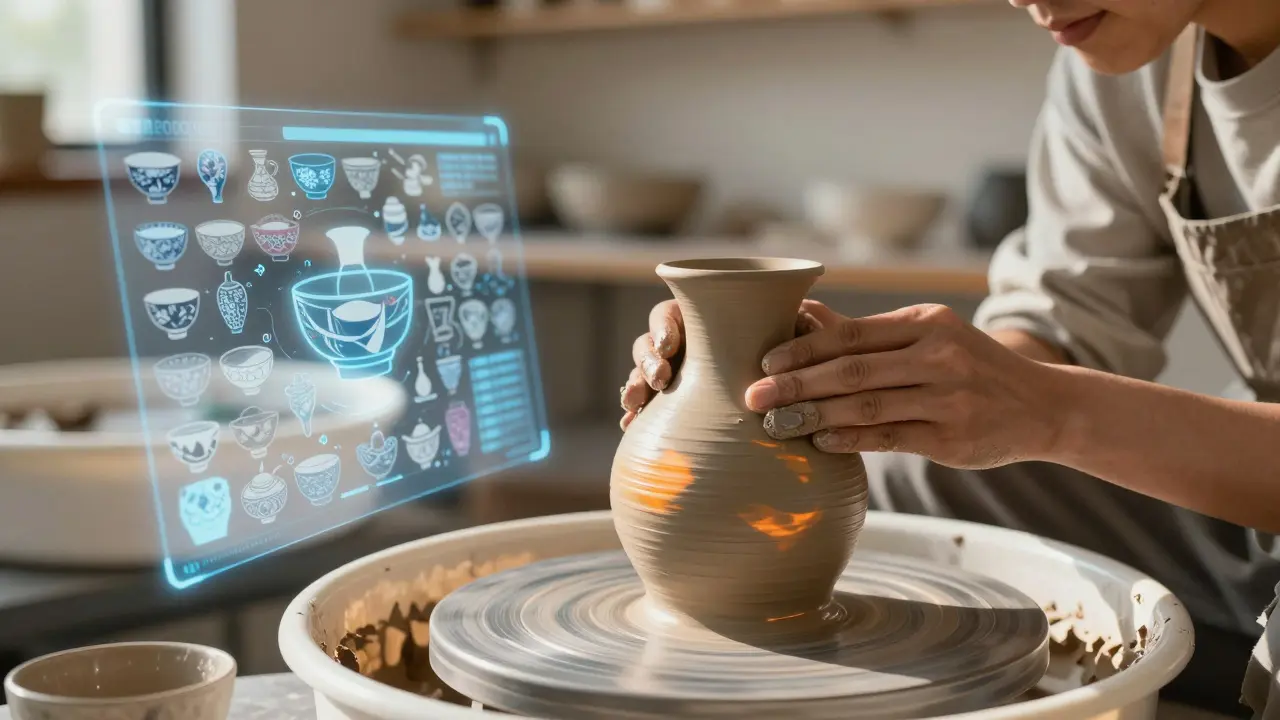
For centuries, craft making was about hands, time, and intuition. A potter felt the clay’s resistance. A weaver counted threads by touch. A woodcarver listened to the grain. Today, those hands are getting help-from algorithms.
Artificial intelligence isn’t just changing how we work or shop. It’s reshaping the soul of handmade things. You can now design a ceramic vase with an AI that learns from 10,000 traditional Japanese tea bowls. You can generate embroidery patterns inspired by Māori kowhaiwhai motifs, then send them to a home machine that stitches them with perfect precision. This isn’t replacing craft. It’s expanding it.
AI Doesn’t Replace the Maker-It Amplifies Them
Some fear AI will turn crafts into mass-produced clones. But that’s not what’s happening. The makers who thrive are the ones using AI as a collaborator, not a replacement.
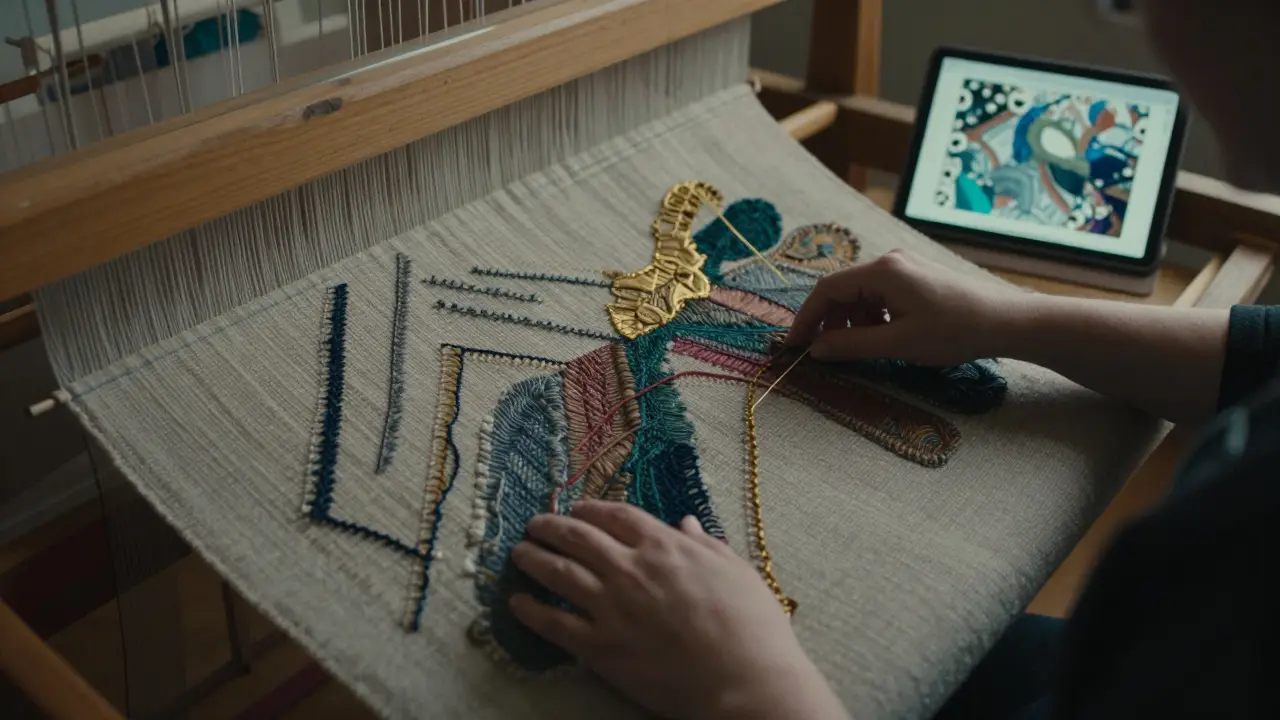
Take Sarah Lin, a textile artist in Portland. She spent years trying to replicate the uneven, organic texture of hand-spun wool in her tapestries. No machine could do it. Then she trained a neural network on photos of 300-year-old Scottish tweeds. The AI didn’t copy them. It learned the rhythm of irregularity-the slight slant of a thread, the way dye pooled unevenly. Sarah now uses that model to generate new textures she never imagined. She still weaves every piece by hand. The AI just gave her a new language to speak with her loom.
AI tools now let crafters do things that were once impossible without decades of training. Want to design a lace pattern that blends Victorian filigree with modern minimalism? Upload a few reference images. Let the AI suggest 50 variations. Pick the one that feels right. Adjust the scale. Export the file. Print it on transfer paper. Stitch it by hand. The machine did the heavy lifting. The soul? Still yours.
Tools That Are Already Changing the Game
There’s no single AI tool for craft making. But several are quietly becoming staples in studios from Bali to Belfast.
- Style Transfer Models like those in Adobe Firefly let you apply the visual language of a 19th-century Persian tile to a hand-painted mug design. You keep control over color, placement, and brushwork.
- Generative Design Software such as Autodesk’s Fusion 360 with AI plugins can optimize the structure of a wooden chair for minimal material use-while keeping its traditional silhouette. Craftsmen use this to make stronger, lighter pieces without losing heritage aesthetics.
- AI Pattern Generators like PatternMind or CraftAI analyze regional motifs from global archives and suggest new combinations. A quilter in Georgia can generate a pattern that fuses Gee’s Bend quilting with West African strip-weave styles, then send it to a CNC cutter for precise fabric layout.
- AI-Powered Color Palettes trained on natural dyes from indigenous communities help makers avoid cultural appropriation. These tools don’t just suggest colors-they explain the cultural context behind them, so you know when to use a dye, and when to respectfully decline.
These aren’t magic wands. They’re like a new set of chisels or needles. You still need skill to use them well. But now, you have more tools to explore.
Preserving Culture Without Locking It in a Museum
One of the biggest risks with AI in craft is homogenization. If everyone uses the same AI model trained on popular Etsy designs, will we lose regional diversity?
That’s why some communities are building their own AI models-using their own archives.
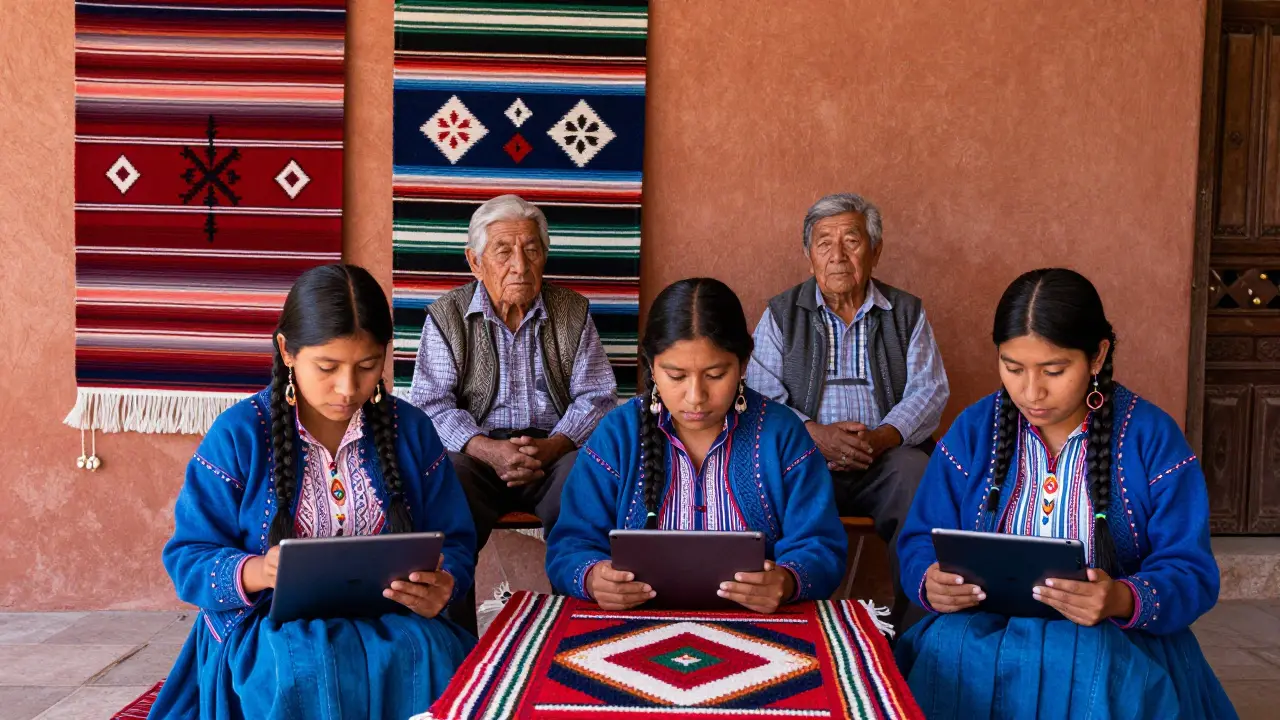
In Oaxaca, Mexico, a collective of weavers uploaded photos of 500 handwoven rugs from their families’ homes. They tagged each one with the weaver’s name, village, and the story behind the pattern. Then they trained a local AI on that dataset. The result? A tool that generates new designs rooted in their own traditions-not global trends. Now, young weavers use it to create modern pieces that still carry their ancestors’ language.
Similarly, in New Zealand, Māori artists are using AI to revive endangered weaving techniques. By feeding the system photos of tukutuku panels from museums and private collections, they’ve rebuilt lost stitch sequences. The AI doesn’t decide what’s made. It helps recover what was nearly forgotten.
This isn’t about outsourcing culture to a machine. It’s about giving it a new voice.
The New Skills Crafters Need
You don’t need to be a coder to use AI in craft making. But you do need to understand a few basic ideas.
- Input matters more than output. The quality of your AI results depends on what you feed it. Use high-res photos of your own work. Include notes about materials, techniques, and intent. The more specific, the better.
- AI suggests. You decide. Never accept the first suggestion. Filter. Reject. Modify. The best AI-assisted crafts have a human fingerprint-slight imperfections, unexpected color shifts, a texture that feels alive.
- Know your data. If you’re using a public AI tool, check where its training data came from. Is it using sacred patterns without permission? Are you unknowingly copying someone else’s design? Ethical use matters.
- Document your process. Keep a journal. Note which AI prompts worked. Which didn’t. What you changed manually. This builds your own personal archive-and becomes your unique style over time.
Think of AI like a really smart apprentice. It can fetch tools, mix pigments, suggest layouts. But only you know what the piece is meant to say.
What This Means for Buyers and Collectors
If you’re buying handmade goods, you’re not just buying an object. You’re buying a story. Now, that story has a new chapter.
A ceramic bowl might be shaped by hand, glazed by hand-but the glaze pattern was generated by an AI trained on Ming dynasty shards. Does that make it less valuable? Not if you know the story. In fact, it often makes it more meaningful.
Buyers are starting to ask: “Was AI used? How?” Transparency is becoming a selling point. Some makers now include QR codes on their tags that link to a short video showing the AI’s role in the process. It’s not hiding the tech-it’s celebrating the blend.
Collectors are also noticing a new trend: AI-assisted heritage crafts. These are pieces that honor tradition but use modern tools to push boundaries. They’re becoming highly sought after-not because they’re perfect, but because they feel alive.
The Limits of AI in Craft
AI can’t feel the weight of a tool in your hand. It can’t sense the mood of the day that makes a carving more expressive. It doesn’t know grief, joy, or patience.
There are things AI will never do well in craft:
- Improvise when a material cracks unexpectedly.
- Choose to leave a flaw in because it tells a better story.
- Build a relationship with a client over months to understand what they need without saying it.
- Pass down knowledge through silence, not code.
These are the human edges that make craft sacred. AI doesn’t erase them. It just gives makers more space to focus on them.
Imagine a potter who used to spend 12 hours a week sketching designs. Now, with AI, she spends 2 hours generating options-and 10 hours talking to customers, testing glazes, teaching workshops. The machine took the grind. She got her creativity back.
Where This Is Headed
By 2030, AI-assisted craft will be common-not because machines are smarter, but because makers are demanding more freedom.
We’ll see:
- Local AI cooperatives where artisans pool their designs to train shared models.
- AI tools that adapt in real-time to your hand movements-like a digital extension of your wrist.
- Platforms that verify the cultural origins of AI-generated patterns, so no one steals sacred symbols.
- AI tutors that teach traditional techniques to new generations, using interactive 3D simulations.
The future of craft making isn’t robots replacing artisans. It’s artisans using AI to reach further than ever before-to honor the past, invent the new, and keep making things that matter.
Can AI really create authentic handmade crafts?
AI doesn’t make crafts by itself. It helps makers generate ideas, refine patterns, or optimize designs. The actual making-cutting, stitching, firing, carving-is still done by hand. Authenticity comes from the maker’s choices, not the tool. A piece is handmade if a human made the final decisions and put their effort into creating it.
Do I need to know how to code to use AI in my craft?
No. Most AI tools for craft makers today are built into user-friendly apps like Adobe Firefly, Canva, or specialized platforms like CraftAI. You upload images, adjust sliders, pick options. No coding needed. Think of it like using a new type of brush or stencil-it’s a tool, not a programming language.
Is using AI in craft making ethical?
It depends. Using AI to copy a protected cultural design without permission is unethical. But using AI to learn from public archives, collaborate with communities, or revive forgotten techniques is powerful and respectful. Always ask: Who created the data? Was it shared with consent? Are you honoring the source? Transparency builds trust.
Will AI make handmade goods cheaper and less valuable?
Not necessarily. AI can make production faster, but the value of handmade goods comes from story, skill, and uniqueness-not just time spent. A piece with an AI-assisted design that still requires 40 hours of hand-finishing and carries a meaningful cultural narrative often sells for more than a mass-produced item. Buyers are paying for depth, not just labor.
How do I start using AI in my craft work?
Start small. Pick one area where you’re stuck-like pattern design or color selection. Try a free AI tool like Adobe Firefly or Bing Image Creator. Upload 5-10 photos of your past work. Ask it to generate variations in your style. See what feels useful. Don’t try to use AI for everything. Use it to solve one problem. Then build from there.