

Most businesses think AI is for big tech companies with massive budgets. That’s a myth. Real AI tricks-simple, practical, and cheap-are already changing how small teams run their day-to-day work. You don’t need a team of data scientists. You just need to know which tools do what, and when to use them.
Automate Repetitive Tasks Before They Drain Your Team
Think about the tasks your team does every single day: sorting emails, entering data into spreadsheets, scheduling meetings, replying to common customer questions. These aren’t high-value activities. They’re just noise. AI can handle them automatically.
For example, tools like Zapier is a platform that connects apps and automates workflows without code. Also known as Zapier Automation, it was launched in 2011 and now helps over 2 million businesses streamline operations. can take an email from a customer, pull out key details like name and order number, and drop that info straight into your CRM. No typing. No delays. No mistakes.
Another example: ChatGPT is an AI language model developed by OpenAI that generates human-like text for tasks like answering questions, writing content, and summarizing information. First released in 2022, it has become one of the most widely adopted AI tools in business. can draft responses to FAQs in under 10 seconds. Train it once on your product specs, and it’ll answer 80% of customer questions without human input. That’s 15-20 hours a week saved per employee.
Use AI to Predict What Happens Next
Most businesses react. The smart ones predict. AI doesn’t just react to data-it finds patterns you can’t see.
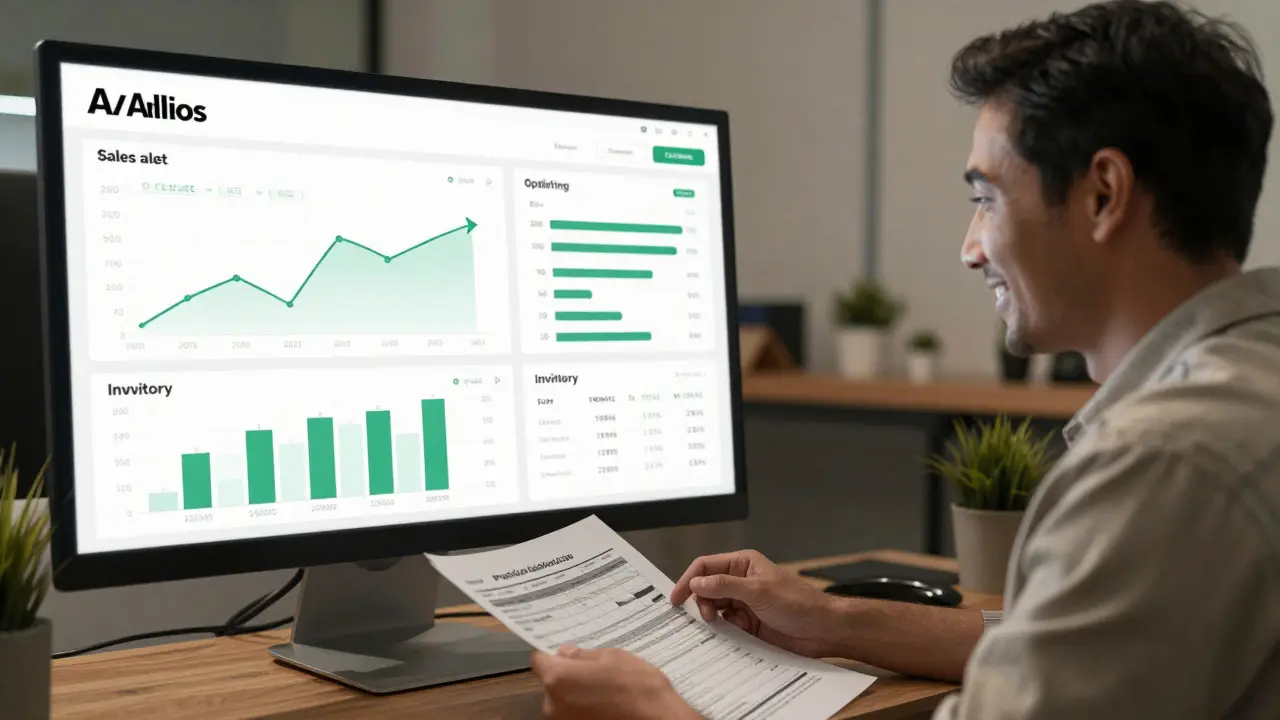
Take inventory management. If you run a small retail store or warehouse, you’ve probably had the problem: too much stock sitting around, or worse, running out right before a big sale. Oracle NetSuite is an integrated cloud-based business management system that includes ERP, CRM, and e-commerce tools. It was first developed in 1998 and now serves over 20,000 companies globally. uses AI to analyze past sales, seasonality, even weather patterns, and tells you exactly how much to order next month. One Australian hardware store cut overstock by 42% in six months just by letting AI handle their supply forecasts.
Same goes for sales. HubSpot is a customer relationship management (CRM) platform that combines marketing, sales, and service tools. Founded in 2006, it now supports over 200,000 customers worldwide. tracks which leads open emails, click links, and visit pricing pages. Then it scores them. The AI doesn’t guess-it learns from what closed deals looked like. You’ll know which prospects are hot before your sales team even calls them.
Turn Customer Feedback Into Real Improvements
People leave reviews. They send support tickets. They complain on social media. But most businesses just collect them. They don’t analyze them.
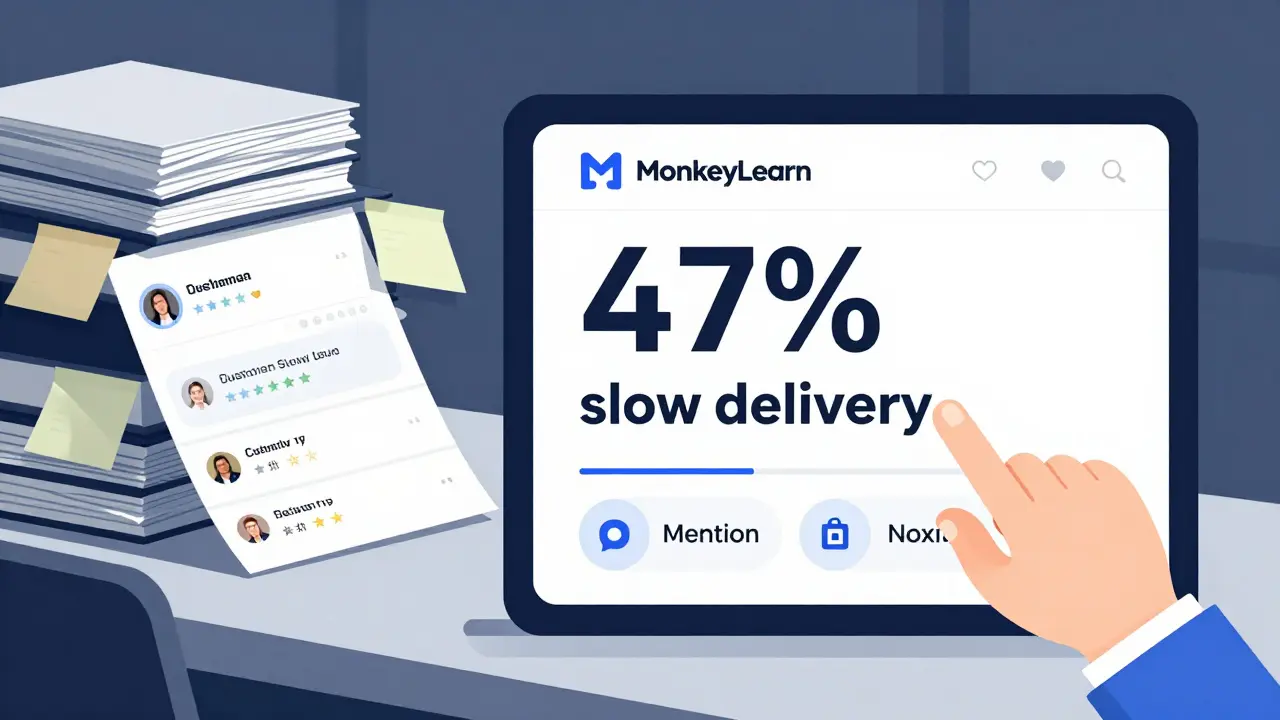
MonkeyLearn is an AI-powered text analysis platform that classifies and extracts insights from unstructured data like reviews and surveys. Launched in 2014, it helps companies process over 10 million pieces of text monthly. can scan 500 customer reviews in five minutes and tell you: “47% of complaints mention slow delivery.” Or “Customers love the packaging but hate the app interface.”
You don’t need to read every single one. AI finds the real problems hiding in plain sight. One café in Adelaide used this to fix their online ordering system. They discovered 68% of negative reviews mentioned the checkout process was confusing. They redesigned it. Sales went up 19% in two weeks.
Optimize Staff Scheduling with Real-Time Data
Scheduling staff is a nightmare. Too many people on slow days? Wasting money. Too few on busy days? Customers leave angry.
When I Work is a cloud-based workforce management platform that automates scheduling, time tracking, and communication for hourly employees. First released in 2011, it’s used by over 50,000 businesses. uses AI to look at historical foot traffic, weather forecasts, local events, and even holiday trends. It then builds a schedule that matches demand-not guesswork.
A fitness studio in Adelaide cut labor costs by 22% without reducing service quality. How? The AI told them they didn’t need three trainers on Tuesday mornings. No one showed up. But on Thursday nights, when the weather turned rainy, they needed five. The system adjusted automatically.
Fix Errors Before They Cost You
One typo in an invoice. One wrong shipping address. One missed deadline. These tiny mistakes add up. They cost time, money, and trust.
DocuSign is an electronic signature and document management platform that automates contract workflows. Founded in 2003, it processes over 1 billion documents annually. doesn’t just let you sign contracts online. It checks for missing fields, compares clauses against templates, and flags inconsistencies. One law firm in Melbourne stopped losing deals due to incomplete paperwork after implementing this.
Even accounting tools like QuickBooks is a cloud-based accounting software designed for small and medium-sized businesses to manage finances, payroll, and invoicing. First introduced in 1998, it now serves over 3 million customers. use AI to spot duplicate expenses, mismatched receipts, or unusual spending patterns. It doesn’t just say “something’s off.” It shows you exactly what, and where.
Start Small. Then Scale.
You don’t need to overhaul everything tomorrow. Pick one broken process. One task that eats up hours. One area where mistakes keep happening. Then try one AI tool.
Try automating email responses first. Or use AI to analyze your top 100 customer reviews. Or let scheduling software handle next week’s shifts. Measure the time saved. The errors reduced. The stress lowered.
Then pick another. And another.
AI isn’t magic. It’s just a better way to do the boring stuff. The stuff that holds you back. Once you stop doing it manually, you can focus on what actually grows your business: talking to customers, building relationships, and solving real problems.
Do I need technical skills to use AI for my business?
No. Most AI tools designed for business operations today have drag-and-drop interfaces or simple settings. You don’t need to write code or understand machine learning. If you can use Excel or email, you can use AI tools like Zapier, ChatGPT, or HubSpot. The hardest part is deciding what to automate-not how to set it up.
Is AI expensive for small businesses?
Not anymore. Many tools offer free tiers or low-cost plans under $50/month. Zapier starts at $20/month. ChatGPT’s business plan is $20/month. QuickBooks and HubSpot have starter versions under $30. For most small businesses, the cost is less than hiring one part-time employee. The savings in time and errors? Often 10x that.
What if AI makes mistakes?
AI isn’t perfect-but neither are humans. The key is oversight, not elimination. Use AI to handle repetitive tasks, but keep a human in the loop for final checks. For example, let AI draft customer replies, but review them before sending. Let it suggest schedules, but approve them. This way, you get speed and accuracy without losing control.
Which AI tool should I try first?
Start with automating one repetitive task that takes up the most time. If your team spends hours answering the same customer questions, try ChatGPT with a custom prompt. If you’re drowning in paperwork, try Zapier to connect your forms to your CRM. If scheduling is chaotic, test When I Work. Pick one area where frustration is highest. Solve that first. Success there builds confidence to try more.
Can AI replace my employees?
No-not if you use it right. AI replaces tasks, not people. It takes over the boring, repetitive stuff so your team can focus on what humans do best: solving complex problems, building relationships, and making judgment calls. Employees who use AI become more valuable, not replaceable. The goal isn’t to cut staff-it’s to help them work smarter.