

Most companies treat artificial intelligence like a magic wand. They expect it to fix broken processes overnight or generate revenue out of thin air. That mindset leads to wasted budget and frustrated teams. The truth is much simpler. AI is a set of tools that automates decision-making and pattern recognition. It works best when you apply it to specific, boring problems rather than chasing hype.
If you want your business to actually benefit from these technologies, you need to shift from "What can AI do?" to "Where are we losing money or time right now?" This guide breaks down the most effective ways businesses are using AI in 2026, focusing on practical steps you can take immediately.
Start with Data Hygiene Before Buying Tools
You cannot build a house on sand, and you cannot build an AI strategy on messy data. Many leaders skip this step because it feels administrative. It isn't. Your data quality determines your AI output quality. If your customer records have duplicate entries, missing phone numbers, or inconsistent formatting, any machine learning model trained on that data will give you wrong answers.
Data hygiene is the process of cleaning, validating, and organizing data sets. Before you spend a dollar on software, audit your core databases. Check your CRM for duplicates. Ensure your inventory logs match your warehouse reality. Use simple scripts to standardize date formats and address structures. Clean data reduces the error rate of automated systems by up to 40%. It also makes future integration with new tools seamless.
- Audit one critical database per month.
- Remove duplicate customer profiles.
- Standardize naming conventions across departments.
- Archive old data that no longer impacts current decisions.
Automate Repetitive Tasks to Free Up Human Talent
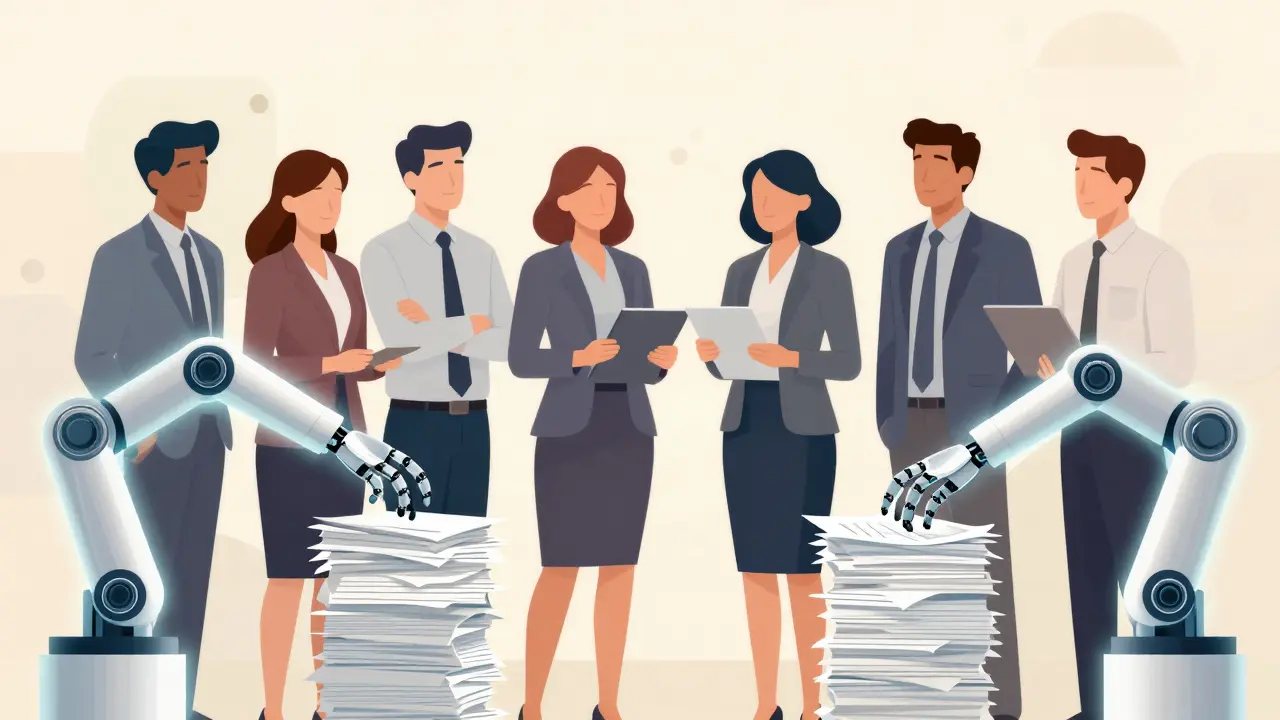
The biggest mistake businesses make is trying to replace humans with robots. The goal should be to remove the drudgery so your team can focus on high-value work. Look at your daily operations. Where are people spending hours copying data between spreadsheets? Who is manually answering the same five questions every day?
Robotic Process Automation (RPA) combined with AI handles these repetitive tasks efficiently. For example, an AI agent can read incoming invoices, extract the vendor name, amount, and due date, and then enter them into your accounting software. This cuts processing time from minutes to seconds. Your accounts payable clerk then only reviews exceptions instead of entering every single line item.
This approach boosts morale. Employees hate doing mindless data entry. When you automate those tasks, they feel trusted to handle complex problems. You also reduce the risk of human error, which often costs more than the technology itself.
Use Generative AI for Content at Scale
Content creation used to be a bottleneck. Writing blog posts, drafting emails, or creating social media captions took hours. Now, Generative AI is technology that creates text, images, and code based on prompts. allows teams to produce drafts in minutes. But here is the catch: raw AI output is often generic. It lacks your brand voice and specific industry nuance.
To get real value, use AI as a co-pilot, not the pilot. Feed it your past successful content, your brand guidelines, and specific customer pain points. Ask it to outline three article ideas based on recent search trends. Then, have a human writer expand on those outlines with personal anecdotes and expert insights. This hybrid model gives you speed without sacrificing quality.
In 2026, the market is flooded with AI-generated noise. Readers can spot shallow content instantly. Your competitive advantage comes from adding human context, local knowledge, and genuine expertise to AI-assisted drafts. This keeps your engagement rates high and builds trust with your audience.
Predictive Analytics for Inventory and Sales
Guessing what customers want is expensive. Overstocking ties up cash flow. Understocking loses sales. Predictive analytics changes this game by looking at historical patterns to forecast future demand. This isn't just for giant retailers; small businesses can use these tools too.
Predictive analytics uses statistical algorithms to identify the likelihood of future outcomes. By feeding your sales history, seasonal trends, and even local weather data into an AI model, you can predict exactly how many units you need next month. For instance, a coffee shop in Brisbane can adjust its bean orders based on predicted rainfall and temperature spikes.
This precision reduces waste and improves margins. You stop reacting to emergencies and start planning proactively. Apply this logic to staffing as well. Predict busy periods and schedule shifts accordingly. Your customers get better service, and your labor costs stay under control.
| Task | Traditional Method | AI-Enhanced Method | Benefit |
|---|---|---|---|
| Customer Support | Manual ticket routing | AI chatbots handle initial queries | 50% faster response time |
| Inventory Management | Reorder based on fixed thresholds | Predictive demand forecasting | Reduced stockouts and overstock |
| Marketing Campaigns | Broad demographic targeting | Personalized dynamic content | Higher conversion rates |
| Data Entry | Manual typing | Automated extraction and validation | Near-zero error rate |
Personalization Beyond First Names
Sending an email with "Hi [Name]" is not personalization. Real personalization means showing the right product to the right person at the right time. AI analyzes individual user behavior to create unique experiences. If a customer browses hiking boots but doesn't buy, AI can trigger an email offering a discount on waterproof socks, not just another pair of boots.
This level of detail requires integrating data from multiple sources. Connect your website analytics, email platform, and purchase history. Machine learning models can identify subtle patterns in user behavior that humans miss. They segment your audience dynamically. A user might be a "price-sensitive browser" today and a "loyal repeat buyer" tomorrow. Your marketing messages should adapt to these shifting identities automatically.
Customers expect this relevance. Generic blasts get deleted. Tailored recommendations drive loyalty. Start small by personalizing product recommendations on your homepage. Track click-through rates and refine your segments over time.

Security and Ethics Are Non-Negotiable
As you integrate more AI tools, you expose yourself to new risks. Bias in algorithms can alienate customers. Data breaches can destroy your reputation. Ignorance is not a defense. You must understand how your AI tools make decisions and protect the data they use.
Regularly audit your AI outputs for bias. Does your hiring tool favor certain demographics? Does your credit scoring algorithm unfairly penalize specific groups? Correct these issues before they become public scandals. Also, ensure compliance with privacy laws like GDPR or local regulations. Be transparent with customers about when they are interacting with AI. Trust is hard to build and easy to break.
Measuring ROI of AI Initiatives
How do you know if your AI investment is working? Vanity metrics like "number of AI chats handled" don't tell the full story. Focus on business outcomes. Did customer satisfaction scores improve? Did inventory holding costs drop? Did sales conversion rates increase?
Set clear KPIs before launching any AI project. If you implement a chatbot, measure the reduction in support ticket volume and the improvement in first-response time. If you use predictive analytics, track the accuracy of your forecasts against actual sales. Review these metrics monthly. If the numbers aren't moving, adjust your strategy or pause the initiative. AI is not a set-it-and-forget-it solution. It requires constant tuning and monitoring.
Do I need a large budget to start using AI in my business?
No. Many powerful AI tools offer free tiers or low-cost subscriptions. Start with cloud-based solutions for customer service or content creation. You can achieve significant efficiency gains without building custom models from scratch.
Will AI replace my employees?
Unlikely in the near term. AI is best used to augment human capabilities by handling repetitive tasks. This allows your staff to focus on strategic, creative, and interpersonal work that machines cannot replicate effectively.
How do I ensure my AI tools are secure?
Choose vendors with strong security certifications. Regularly audit access permissions. Train your staff on phishing and data handling best practices. Ensure your AI complies with relevant privacy regulations and ethical standards.
What is the first step to implementing AI?
Identify a specific, painful problem in your business process. Clean the data related to that problem. Then, select a simple AI tool designed to solve that exact issue. Measure the results before scaling up.
Can small businesses compete with large corporations using AI?
Yes. Small businesses can move faster and adopt niche AI tools tailored to their specific needs. Large corporations often struggle with legacy systems and bureaucracy. Agility is your key advantage.